Metal Genres
Death Metal Black Metal Grindcore Thrash Speed Metal Heavy MetalMetal Music
Heavy Metal F.A.Q. Interviews Philosophy Metal Concerts Heavy Metal CDs Heavy Metal MP3sMetal Media
Articles Heavy Metal Zines Heavy Metal Video Heavy Metal Books Metal LinksMetal Community
About Contact Metal Forum Letters Mailing List
 During an unusual time, in which a large number of bigger historical trends reached one of those periodistic points of brutal evidence, metal music punched through the pleasant facade of mainstream music and brought to bear upon a slumbering populace remnants of the ancient Indo-European spirit of vir. It did so through a Romanticist, Faustian form of music-culture which to this day remains controversial, despite the attempts of commercial bands to turn it into a predictable, fatalistic, impotent version of itself.
However, for now it has run its course, so it makes sense to look over the past and from that, divine what might exist of it in the future. The fundamental questions of any artistic movement are "What did it believe that others did not?" and "To what did it appeal?" In metal, there are two interpretations: first, what the musicians who contributed something sizable to the genre intended - I'm not talking about popular but artistically meaningless efforts like Cannibal Corpse or Cradle of Filth - and second, what those outside the genre would like it to mean; generally, since it threatens their worldview, they want it to mean nothing.
I. What did the metal movement believe that was unique to it?
To see this, we have to trace thirty years of its progress. It emerged from the proto-metal of bands like King Crimson, Black Sabbath and Led Zeppelin, and soon solidified into a 1970s style of heavy metal most notably represented by Iron Maiden, Judas Priest and Motorhead (we would include Venom here, but everything they did was done by Motorhead except the explicit and repetitive occult imagery). Heavy metal arose roughly concurrently with punk and hardcore, best represented by early work like Iggy Pop and the Stooges, the Ramones and proto-punk like Link Wray and the MC5. Both movements were dissident movements, meaning that they rejected everything present in popular culture at the time and took a path of ambiguous degree of opposition, but clearly a different and thus incompatible choice.
A. Heavy Metal
With heavy metal, the style of Black Sabbath was solidified, but deeply hybridized with the progressive rock, Celtic folk and electric blues fusion of Led Zeppelin, having influences also from aggro-prog bands like King Crimson and Jade Warrior. The late 1960s culminated in rock being bored with itself, and after the Beatles went progressive and British and American blues-rock guitarists aimed for more lengthy, complex works, rock essentially turning progressive in nature. "Progressive" is perhaps a misnomer, as there's no "progress" in re-incorporating influences from classical music, but for rock it was progress from the simplistic pop of the 1950s to incorporate new styles and vastly adulterate the blues framework of rock (the blues is a syncopated version of Celtic and German folk-pop, formed in America of the mixture of cultures; like most popular music on all continents, it features easily transposed chord progressions and a basic song structure which allows easy melodic improvisation).
This music, tame as it sounds today, was a turd in the punchbowl among the progressive and folksy, mostly pacifistic and hedonistic rock of the time. Unlike the good times and party hearty vibe of most music, metal, like dissident apocalyptic rockers the Doors before it, was "heavy" in that it took on weighty existential topics and its partying was self-destructive, an expression of impending doom. It was not happy fun include everyone music; it was for darker souls, those more likely to strike out in anger at the world, and those who felt a need to reject more than embrace recent social changes. Consequently, it embraced dark imagery, with Iron Maiden taking on occult topics, Motorhead wearing Iron Crosses (a symbol of the defeated National Socialist regime in Germany), and Judas Priest not only writing songs about WWII but openly accepting a demonic, warlike persona.
Alone this would be cause enough to say metal was divergent from rock of the time, but the musical factor of its development was important. Unlike the harmony-based, short-cycle riffs of rock, metal almost exclusively used moveable power chords, which can be played in any position along the neck of the guitar in quick sequence, thus lending to riffs written as phrases (like classical, or jazz) more than rhythmic variations built around open chords. This both simplified the music to the point where it was highly accessible, and gave it a dark sound which lent itself, as in classical composition, toward a narrative song structure in which riffs form motifs that resolve themselves over the course of a song. While clearly much of the heritage of this style comes from the lengthy classical-borrowing epics of progressive rock, between the raw nature of the inverted fifth and the thunderous effect of chordal phrases buffeting the listener, it produced a gnarled, feral sound.
Even more alarmingly, for those who wanted to immerse themselves in the hippie pop of the time, metal was openly embracing of the wilderness (similar to the concept of "the frontier" in the music of the Doors) and replaced a desire for moral certitude with a desire for the lawless. Its musicians wrote about ancient times, about battle and death, and seemed to be searching through the haze of the counterculture for something of eternal meaning, which explains to some degree the vast amount of ecclesiastical and occult symbolism in all metal bands of the period. Indeed, in Venom and Angel Witch and many other NWOBHM (New Wave of British Heavy Metal) acts, there was an almost exclusive focus on the dark side and on the spiritual figures society rejected for not being tamed, such as Lord Satan himself.
Using occult imagery to reflect political topics was also popular, and is best exemplified by what became the prototype of all "Satanic" metal lyrics to follow, Black Sabbath's "War Pigs":
just like witches at black masses.
Evil minds that plot destruction,
sorcerers of death's construction.
In the fields the bodies burning,
as the war machine keeps turning.
Death and hatred to mankind,
poisoning their brainwashed minds.
Oh lord, yeah!
Politicians hide themselves away.
They only started the war.
Why should they go out to fight?
They leave that role to the poor, yeah.
Time will tell on their power minds,
making war just for fun.
Treating people just like pawns in chess,
wait till their judgement day comes, yeah.
Now in darkness world stops turning,
ashes where the bodies burning.
No more War Pigs have the power,
Hand of God has struck the hour.
Day of judgement, God is calling,
on their knees the war pigs crawling.
Begging mercies for their sins,
Satan, laughing, spreads his wings.
Oh lord, yeah!
- War Pigs, Black Sabbath
In this song, a humanity distracted by political and monetary concerns turns its back on reality, thus a travesty occurs and is unnoticed by all while, in the last verse, the demonic figure of hatred and death triumphs.
Heavy metal grew prodigiously from 1972 to just after the turn of the decade, and at that point was replaced by newer styles which represented a re-infusion of hardcore punk styles; unlike punk, hardcore punk did not follow pop song structures nor did it use conventional harmonics, often consisting of two or three power chords per song, rhythmic and droning riffing, and songs that like small operas were built around their own topics. If a song was about death, it might end abruptly; a song about war might diverge into a middle interlude with no immediate relation to the previous works. What drove hardcore punk was the insistent pace of its music, and the power chord phrases that resembled the topics of each song much as each song's structure resembled the topic being discussed. Lyrics and music were united. However, hardcore was quite simple and soon drowned in a sea of imitators.
B. Speed Metal and Thrash
Like hardcore, the next generation of metal was confrontational with its alienation and took a political and socially-critical angle; because of the Cold War going on at the time, most of these artists believed themselves to be the victims of centralized government and its political wars detached from the daily lives of the people, and thus the ethics of the music were highly populist and individualistic. The latter tendency would save later generations from being absorbed by the former, as hardcore was almost entirely by 1985, at which point the musical quality declined rapidly (to embrace populist politics means, in a liberal democratic era, to abandon dissidence for an extremism of the dominant rhetoric of the age). As hardcore died, it passed on its genetic material to metal, and the best examples of this were Discharge and the Exploited and GBH, whose stylistic attitudes appeared through succeeding generations of metal.
Arguably the first genre to emerge was speed metal, which followed expanded heavy metal structures but used muffled strumming to turn ringing chords into short explosive bursts of bass-intensive sound. This made the music more aesthetically menacing, and for a long time, guaranteed it zero airplay. On the other end of the spectrum, thrash music made less frequent use of muffled chords but took on two forms: metal riffs in punk song structures (COC, DRI) and punk riffs in metal song structures (Cryptic Slaughter, dead horse). Speed metal tended to use metal riffs in metal song structures but show the influence of hardcore music in riff texturing, which evoked the sounds of one-chord rhythm riffing, and in general uptempo songwriting and abrupt changes in melodic line within each song. Perhaps the best examples of speed metal were Metallica, Exodus and Slayer; the first two were based around muffled-chord player, while the latter focused on playing quick fluid phrases known for their complexity, and using introductory sequences of riffs like a progressive band in simple, aggressive form.
Covered with pretty girls and catchy lines
Put up the fences and cement the ground
To dull my senses, keep the flowers down
- Give My Taxes Back, Dirty Rotten Imbeciles
Thrash died out early, because there is only so much one can do with short, fast songs (frequently under thirty seconds). Speed metal proved to be too close to the heavy metal song format, and since there was more money and future for the musicians in radio-friendly heavy metal than battering-ram speed metal, most speed metal bands by the turn of the decade mutated into heavy metal acts with "speed metal influences," in the case of Metallica eventually going on to incorporate country music into their sound. This "selling out" of speed metal reflected a fundamental division in metal at the time, namely the perception that one could not speak the truth in public, and thus anything popular had compromised reality for a public reality which sold records. This belief was also echoed in the indie, grunge, rap, techno and punk music of the time.
Thrash bands tended to write a mixture of "political" songs and more direct, existential critiques of modern society; for example, in DRI's "Give my taxes back." Speed metal bands incorporated a fair amount of such existential critique as well, for example Metallica's "Escape."
I know I'm my best friend
No one cares, but I'm so much stronger
I'll fight until the end
To escape from the true false world
Undamaged destiny
Can't get caught in the endless circle
Ring of stupidity
Out of my own, out to be free
One with my mind, they just can't see
No need to hear things that they say
Life is for my own to live my own way
Rape my mind and destroy my feelings
Don't tell my what to do
I don't care now, 'cause I'm on my side
And I can see through you
Feed my brain with your so-called standards
Who says that I ain't right
Break away from your common fashion
See through your blurry sight
Out of my own, out to be free
One with my mind, they just can't see
No need to hear things that they say
Life is for my own to live my own way
See they try to bring the hammer down
No damn chains can hold me to the ground
Life is for my own to live my own way
- Escape, Metallica
However, the majority of songs in speed metal rotated around fear of government, nuclear war, apocalypse, social issues and occult topics. What was common to both movements was a belief that the path of progress as a general item was missing the point, and that somehow there was something inarticulable in polite society that needed to be done. As time went on, however, even these genres fell short because of their popularity, in the view of many metal artists, and thus the next step was taken.
C. Grindcore and Death Metal
It is probably a mistake to view grindcore as anything but an extremist extension of thrash, but much as Venom contributed aesthetics in the form of primitive punkish riffing and over-the-top Satanic and occult lyrics, grindcore contributed the biologically distorted vocals which would also be a trait of death metal and black metal. These are achieved by, much as one overdrives an amplifier to distort sound, pitching one's vocal chords in a position too low or too high for the sound produced, and then forcing it through violently (it will become clear around 2020, when these musicians hit their fifties, whether or not this causes a dramatic increase in throat cancer). Hardcore musicians used an approximation of this, much like the growling surly cadences of Wattie with the Exploited, but grindcore took it to a new extreme, in songs which were punkish and abruptly short like those of thrash, but even more inclined toward chromatic and harmonically-nullifying chord progressions. This was a music beyond protest; it destroyed music itself in order to create a wall of sound which was unnacceptable in any social listening, would never get radio airplay and annoyed and disturbed anyone not acquainted with the genre.
Grindcore lyrics were usually political, in a paranoid and anarchistic view of the world, but could be quite insightful, as this example from Swedish band Carbonized:
Early grindcore bands worth mentioning are Napalm Death and Carcass, both from the UK, and related projects, also both related to industrial grindcore band Godflesh. Napalm Death was known for songs as short as one second; the band deliberately played out of time with each other during certain sections of song to achieve a muddy, blurring, discoordinated effect that made it impossible to tell what was occurring until the next phrase rose out of the muck. Their lyrics were explicitly political and generally leftist, but also highly critical of society as a whole including its populist aspects. Carcass took another route and wrote lyrics using complex latinate words from medical textbooks, describing in playful and mocking fashion the process of dying, being mutilated, and experiencing disease (the emphasis on complex latinate language was shared by bands such as Slayer and Judas Priest). The unstated purpose of this seemed to be to remind the audience that mortality is real, and thus life is indeed quite short, and therefore: we're playing for keeps with our public actions and private decisions, because life is limited and death very near and the consequences of our actions will catch up to us. Interestingly, grindcore occurred almost entirely before the end of the Cold War (roughly: 1989), as if someone finally listened.
Serve and be a part of us in modern time
Parents have never existed; your blood, state property
Leave personality; total trust will make security
Your ears - our information
Your eyes - our sight
Implanted in society - only for the security
From childhood to the grave
Every step will be safe as we are behind
Guided through life blessed in our birth
So our secret son welcome to the promised life...
- For the Security, Carbonized
Death metal arose roughly concurrently with grindcore, but only became solidified as a style during the waning days of grind; it borrowed vocals and techniques from grindcore, but emphasized precision and clear structure instead of confusion. Musically, it resembles speed metal re-hybridized with hardcore, then run through a progressive filter: songs are epic in structure, but often chromatic in harmony, with "free jazz" styled improvisation for lead solos and determining the course of phrase. Like most heavy metal to date, it emphasized phrasal songwriting, where riffs were not so much recursion as they were phrases that evolved throughout a song, except even to a greater extreme in death metal . Breaking from the hardcore tradition, it resurrected some of the grandeur and refined apocalyptic presentation of music from the Doors through early heavy metal. For the first time, something as abrupt and disturbing as Black Sabbath had been in 1969 had again come to metal, as if overcoming the Led Zeppelin influence and focusing purely on primitive music written into lengthy, narrative structures like progressive rock or classical. However, it was limited by its emphasis on chromatic rhythm riffing, and its use of a single chord shape, the inverted fifth.
If one had to give death metal a birthdate, it would probably be 1985; in this year, bands such as Possessed and Sepultura took the thrash-influenced proto-death/proto-black metal of bands like Sodom, Bathory and Hellhammer and made a more rhythmic, architecturally structured music of a "riff salad" which arranged related ideas in motifs and used them to illustrate the passage of an idea through a song; it is most similar to opera or classical music, albeit done in a far simpler style within the format of rock music: drums, two guitars, bass and vocals. These used the death metal vocal style which was distinct from that of grindcore in that greater enunciation occurred, yet often there were subverbal sounds used for emphasis (this is a longstanding rock and blues tradition). By 1987, when Necrovore from Texas recorded their demo finalizing the death metal style and Massacra in France had expanded the genre to include classically-evocative high-speed riff narratives, bands such as Morbid Angel and Morpheus (Descends) were already defining styles of death metal . Interestingly, in Europe, the new style was incorporated into speed metal in bands like Kreator and Destruction; in America, hybrids also existed, such as Rigor Mortis ( speed metal vocals and song structure, death metal riff styles) and Death Strike/Master (punk riffs, death metal vocals and song structure).
Because the early death metal and black metal bands shared a genesis in acts like Sodom, Bathory, Possessed and Celtic Frost, much of the pre-history of death metal is addressed in the following section.
 With the emergence of genre-defining acts like Morbid Angel, Deicide, Incantation, Immolation and Suffocation, death metal defined itself as a clear style of several components. Some, like Morbid Angel, were an updated version of Slayer, an updated version of Judas Priest itself, and used speed metal song structures with death metal riffs, topics and presentation. Others, like Suffocation, used an extreme form of speed metal riffing, with its choppy percussive muted-strummed chords, a form embraced to a lesser degree by Deicide, who focused on intensity and searing atonal solos. Immolation was a hybrid between these that used slower tempos in alternation with faster, more percussive moments in song. Incantation created dirges that picked up tempo into slurries of fast chords, with the barest moments of asymmetrical melody gracing the tirade accompanied by blast.
These bands (among others) represented the first wave of death metal ; it's important to note that without Morpheus (now Morpheus Descends), Suffocation would not exist, and that Morbid Angel derived much of its aesthetic and melodic components from Necrovore; Deicide seems like a faster, healthier, more technical version of Slayer's "Reign in Blood." In this division of styles is visible the varying degree of influences from metal's past, including speed metal and thrash and grindcore, and this conflict of interpretations over technique led to a splintering in agreement on how the music should be composed, with some favoring a primarily rhythmic approach like that of speed metal bands, and others reaching toward outright melodic music or music that were it not chromatic would be melodic in structure, since it was exclusively phrasal. (The oft-mentioned Death, whose speed metal hybrid death metal eventually disintegrated into heavy metal with death metal vocals, deserve a footnote but no more, as without the massive overhype this band was above average but conveyed mainly by influences from other acts.)
Death metal went through several generations. The first was the 1985-1988 style best exemplified by Sepultura and Massacra; the next two years brought its classic style, as shown by the bands mentioned in the previous paragraph. After that, a divergence occurred. First, the Swedish death metal bands, who had been present but mostly unknown outside Sweden, took predominance with bands like Entombed, Therion, At the Gates, Dismember and Suffer. These used rigid riff playing in a shifting frame of tempo reference, in a style pioneered by Asphyx and Sinister (from the Netherlands) among others, but added to it a blistering new form of distortion which increased the tremelo effect of their riffs, elliding notes together into a liquid flow of melody (interesting, Robert Fripp from King Crimson invented an extreme form of this with his "Frippertronics" ambient music). This caused the emphasis in songs to shift from chromatic rhythm playing to a firm pace with many changes, over which melodic phrasal composition formed the expository work of each song. This increased the complexity of the music, and gave composers more with which to work, in part spawning a series of progressive-influenced death metal bands.
To enter the stream
To let carnates know
What life really means
If one understands
That's all I can ask
Life to you
is such a wretched task!
- An Incarnation's Dream, Atheist
From Florida came Atheist, who wrote jazz-technique-influenced death metal that used classic metal narrative melodic songwriting, establishing with their landmark "Unquestionable Presence" the formative nature of the post-classic death metal genre. Alongside them came a series of bands, including Gorguts from Canada and Demilich from Finland, who pushed boundaries in harmony and melody further without giving up the structuralist form of death metal (interestingly, Deicide's second album, "Legion," also belongs to this category). Amorphis rounded out the ground by producing an album of simple riffs in epic, emotional songs - this was "The Karelian Isthmus," and its influence is understated to this day. This was the golden age of fully mature death metal , and it culminated around 1994 when the form itself became limiting, in part because death metal audiences expected "brutal" sounds of a simplistic and sonic nature, but also in part because death metal retained too much of speed metal and hardcore punk in its presentation to escape its own impetus, namely the shock of growling vocals and pounding, nihilistically chromatic riffs. Consequently, the next genre to emerge rectified this situation, after a brief downtime in which mainstream influences merged with underground, even influencing the most popular radio genre of the day.
D. Doom Metal and Grunge
During the early 1990s, an offshoot movement of death metal merged with the older style of heavy droning rock that Black Sabbath had pioneered, and formed doom metal, a genre fragment that immediately offered enough possiblity that it rapidly mutated and then died under its own weight. The most evident acts in this category were Cathedral and My Dying Bride; Cathedral made rock-oriented, heavy, and unbearably slow songs which centered around mournful topics and a certain amount of self-pity, while My Dying Bride fully immersed themselves in the maudlin but increased the instrumental aspects of the genre, incorporating interleaving melodies and violin accompaniment (something also attempted on At the Gates' second full-length). Rounding out the genre were bands such as Winter, Thergothon and Skepticism, with the former making nearly industrial slow and grinding bizarre music, and the latter two - as if incorporating a Dead Can Dance influence - producing slowly developing melodic songs with soundtrack-like mood regulation through keyboards and noise. All of these bands shared a common element: they worked with drone, and by the nature of drone, used melodies diminishing in interval over time such that they started from open harmony and ended in near-chromatic entropy.
Influenced in part by Celtic Frost and other classic metal and punk bands, Nirvana burst onto the mainstream radio with a new style called "grunge" that was part metal and punk, but mostly mournful, out-of-the-closet angsty rock which featured droning vocals and simple punklike riffs. Other interesting acts were Mudhoney and Alice in Chains; both enjoyed popularity with metalheads, with the most crossover being with doom audiences. This is in part because musically, these two genres were the most similar, and aesthetically, they both addressed a fatalism which some overcame and others (Goodbye Mr. Cobain) did not. Fatalism is the belief that one can do nothing about one's fate but mourn it as a means of accepting it; it is easily confused with nihilism, or a belief in nothing but the inherent value of ultimate reality, and general negativity, which can be either a form of aggression or passive self-pity like fatalism. Doom metal explored these areas, but what pleased the crowd most were bands that did not escape their fatalism, thus soon the genre shot its wad and died. Grunge suffered a similar fate, modulating gradually into pop-punk which was musically like grunge infused with candy rock and energetic punk rhythms, giving people on the radio a break from the grim as the Clinton administration (counterculture liberalism triumphing over "the establishment") and the Internet boom (newfound wealth, a new frontier) developed.
E. Black Metal
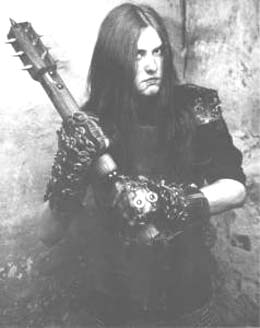 Black metal was born at the same moment as death metal , and initially, was indistinguishable from it. Early bands such as Sodom and Bathory were like speed metal mixed with thrash, which re-incorporated the type of epic song that Black Sabbath had popularized with their less radio-friendly pieces. It is impossible here to negate the influence of Motorhead, who used simple punk/progressive riffs in metal songs, and Venom, who created the aesthetics of simple song, insistent rhythm and occult lyrics with growling voice; these two bands influenced this genre the most. Interestingly, the birth of proto-death/proto-black metal bands such as Sodom and Hellhammer and Bathory was in 1983, at the same time American speed metal bands like Slayer were first recording. This parallel development reflected the dual nature of American and European metal, with Europeans instinctively taking to melodic composition while Americans developed rhythm and technique.
Deceased humans now forgotten
An age of legends and fear
A time now so distant
Less numbered as they were their lives
So primitive and pagan
Superstitions were a part of the life
So unprotected in the dark nights
Pagan fears
The past is alive
The past is alive
Woeful people with pale faces
Staring obsessed at the moon
Some memories will never go away
And they will forever be here
- Pagan Fears, Mayhem
After the birth of this new form of metal, the first form to be like hardcore punk "underground" and thus distributed by an informal network of small labels and zines in an effort to escape commercialization and the corruption of viewpoint that comes with it, metal veered toward the most achievable idea first: death metal . Its mostly rhythmic and chromatic basis allowed it to be fully explored from the early eighties until the early 1990s, at which point the first black metal based on the lessons of death metal , or "modern black metal," emerged. The first wave of bands were almost exclusively from the same Scandinavian countries that had produced death metal of a melodic nature, and comprised Immortal, Mayhem, Beherit, Gorgoroth, Burzum, Enslaved, Darkthrone and Emperor. These foundational acts essentially defined the genre; in Greece, a hybrid form of heavy metal and black metal emerged with Varathron and Rotting Christ, who shared members who had previously been in death metal bands (arguably, Rotting Christ's first album is death metal , and the name clearly belongs to the death metal and not black metal genre). In America, the only foundational modern black metal band was Havohej, which contained personnel who had formerly been in Incantation.
Unlike death metal, black metal was explicitly melodic in composition, although there were multiple interpretations of how to compose it. Immortal started out resembling later Bathory, but evolved into fast melodies of power chords over incomprehensibly fast, muddled drumming, which demoted the influence of drums to secondary and let guitars function as the primary composition instrument, with vocals (!) being the predominant rhythm instrument. Darkthrone began not far from a hybrid between Swedish death metal and doom metal, but quickly began a tribute to the more extreme aspects of older Bathory, with songs staged dramatically such that a story unfolded and was presented as one might in a theatre, with percussion and pacing to match the scene. Burzum resembled the best of death metal in its smoothly chained collection of riffs and narrative, mimetic composition, but over time moved closer to ambient music. Emperor and Gorgoroth were neoclassical music over traditional drums at a higher pace, with less focus on fills than on counterbalancing internal rhythms within songs. Between these techniques and the range of melody - with varied emotions, moods and developing phrases based on previous motifs - modern black metal represents the highest evolution of metal as a technical and artistic musical genre.
F. Black Hardcore and Nu-Metal
Black metal was both music and a circus, in that news of the murders coming out of normally peaceful Scandinavia, the fascist and neo-Nazi beliefs of many of the bands, and of course the sensation of music that embraced occult and naturalistic themes in a literal sense, symbolism both by Lucifer and the wolf in winter, howling over his weaker prey, contributed to an atmosphere of suspending the normal rules of society. Once the creative instigators of the genre had said their piece and retired, or settled for making music of a more crowd-pleasing aspect, the new civilization created by black metal was replaced by those who wished to inhabit it and have what it created for themselves.
Slick as grease and cold as ice
There is a lie in every meaning
Rest assured to fool you twice
In this age of utter madness
We maintain we are in control
And ending life before deliverance
While countries are both bought and sold
Holy writtings hokus-pokus
Blaze of glory and crucifix
Prepried costly credit salvations
TV-preachers and dirty tricks
Don't trust nobody
It will cost you much too much
Beware of the dagger
It caress you at first touch
O, all small creatures
It is the twilight if the gods
When the foundations to our existence
Begins to crumble one by one
And legislations protects its breakers
And he who was wrong but paid the most won
Even the gods of countless religions
Holds no powers against this tide
Of degeneration because we have now found
That there is no thrones up there in the sky
Run from this fire
It will burn your very soul
Its flames reaching higher
Comed this far there is no hold
O, all small creatures
It is the twilight if the gods
- Twilight of the Gods, Bathory
What emerged of this was the same inevitable end that had swallowed hardcore, grindcore, speed metal and death metal , namely the surging of the crowd to occupy the space, imitating the aesthetics of the music but unable to reproduce the content that made it stand head and shoulders above the crowd. True to the nature of all popular movements, these reverted to a populist viewpoint; instead of using Satan or lawless nature as metaphor, they took them literally. Thus came about a wave of bands making Satanic music and purporting to "hate everyone equality" and "want death for all humanity," without realizing they'd been played like a rental fiddle. The emulators did not have the musical subtlety of the original, and thus started making music that resembled punk rock with the trappings of black metal. It is fair and historically accurate to call this black hardcore.
Unlike the metal before it, this music did not aim to be distinctive but focused on fitting into the most popular definitions of the genre, which were by nature narrow, or on being "unique" by taking that format and modifying it in "unexpected" ways, usually by hybridizing with known genres that had existed before black metal. There is not much to say about this surge of pointless excess except that it failed to achieve the artistic intensity of classic modern black metal, thus like all emulations, all it had to give it importance was its chronological currency, and that faded quickly since there were now "new" bands every week. Like hardcore before it, it died when the leaders left and soon every fan had a band, label, zine or distro, and thus quickly the concentration on relevant content was replaced with a hurry to produce something and sell it. It wasn't commercialization per se, since this has all remained in the underground, but it's another kind of selling out: deferring to the crowd who has pulled away from the mainstream, but has no answers beyond being "different" by doing the same old thing. The music is interchangeable, and serves as an epitaph rather than a continuation for black metal.
 Hardcore in its final days had much the same quality. When the focus shifted from the art to the fans and their self-image, the bands began to sound like each other as new musicians first cloned the old and then began competing on trivial levels of "newness," such as different sounds or imagery. The core of the music called black hardcore is the same as hardcore, emo, punk rock, and even rock itself; it's based on either the three-chord theory in its simplest form, or toneless rhythm riffing, and songs tend to have a verse-chorus structure with any additional portions existing purely for the aesthetics of being "different." What may have been learned is that there's more than one way to sell out, and only one way to make music of lasting significance: to focus on the artistic and emotional and logical attributes of the music, and to push to create not something "new" but something that addresses reality and the experience of people living through it, including what ideals they might have - and their reasons for being dissidents. This isn't to suggest that music should preach, but that it should put into practice its beliefs and create art - objects that praise the meaningful aspects of life - instead of trying to create a placeholder.
In roughly 1996, this decline became evident, and consequently metal fragmented once again. The dichotomy between mainstream and underground widened, and then closed, as mainstream bands began adopting the same techniques as underground, and fans looking into the underground found product that was not musically distinct from the mainstream pop as classic death and black metal had been. This vast failure of spirit, and collapse of metal culture, gave rise to nu-metal and similar genres in the mainstream. To understand why this music was formulated as it was, we must backtrack a slight bit.
our world - our reality
to be that is - is but one
manifestation of the essence
Other planes lie beyond the reach
of normal sense and common roads
But they are no less real
than what we see or touch or feel
Denied by the blind church
'cause these are not the words of God
- the same God that burnt the knowing
- Lost Wisdom, Burzum
As speed metal was dying, Europeans were hybridizing it with death metal styles and producing something which filled the gap, but it was not popular in America, thus a new hybrid was formed here: it used the chord progressions and composition style of rock, the technique of speed metal and the aesthetics of death metal mixed with an urban sense of self-importance and righteous anger (observant readers will note this anger resembles the ressentiment that Nietzsche describes so thoroughly). Pantera was the forerunner of this new music, but in the underground itself, a second-rate death metal band named Cannibal Corpse quickly mutated into its own extreme version of this new form. Both of these bands were vastly popular. In black metal, some Englishmen named Cradle of Filth began rehashing heavy metal of the Iron Maiden and Judas Priest era with black metal vocals and speed, and became equally popular. It is not important that Pantera borrowed its style from Exhorder and Prong, or that Cannibal Corpse borrowed theirs from Suffocation, but that these styles were borrowed and not invented, and thus able to be filled with content not relevant to their creation.
What remains of the nu-metal and black hardcore movements is the knowledge that once again, popularity took over, and bands instead of leading began to follow the desires their audience had in common, which tend to be of a lowest common denominator (perhaps a parallel to democracy is appropriate here; leaders in democracy do not lead, but read opinion polls and act out what they perceive as the simplest expression of the desire of their electorates). Ultimately, this was fatal to the metal movement as it existed, but the terminal decay started before, when the ideas germaine to the creation of these unique styles of music were expressed but the crowd still wanted more product (CDs, tshirts, DVDs, cigarette lighters). It remains enigmatic how such dissident genres can be so easily taken over, but perhaps the truth is that sheep can wear wolves' clothing as well, and that because something is labelled as being dissident does not mean it understands the thought process behind reaching that state enough to express something relevant to it. Much as Christianity invaded pagan culture from within, and soon subverted it and turned its people against themselves, popularity - whether commercial or of the trend-underground type - invaded metal and divided it permanently.
II. To what did it appeal?
When we consider the audience of metal, and why they became metalheads and kept listening to heavy metal and speed metal or death and black metal music, it is clear that there are two minds on the subject: outside the genre, and inside the minds of those who within the genre have created and moved it forward - participation by itself is not important, since simply because one has started a band that sounds like a genre does not mean that one understands it. The public view of heavy metal has been consistent since its inception: in the eye of the mainstream citizen, people listen to heavy metal because they're angry, want to shock other people, and in general evade responsibility for being solid members of the community. To those uninitiated in the metal realm, heavy metal is the equivalent of a kid pushing his plate away at the dinner table because he doesn't like peas.
 This perception seems hollow, of course, once we consider how much easier it would have been for these plate-pushers to create more obvious protest music, or to simply withdraw entirely. More likely is that heavy metal is both a message to society and a suggestion of a different type of order, albeit constrained by the fact that musical subgenres and their subcultures are not full-scale civilizations in themselves. Within the metal genre, meaning within the minds of those creators articulate enough to point to something like a philosophy outside of the music they generate, there is a clear sense of this idea: metal is a spirit rising within society that represents something which society will not accept, cannot nurture and rejects because it is somehow oppositional (enough) to the status quo that it is taboo or even not recognized as signal, but mistaken for noise. But, if we accept its intent as genuine, what does it express?
Looking at heavy metal as a legitimate artistic movement suggests that it is communicating something with its loud, socially-unacceptable, hedonistic and barbarian sound. It does not aim for consonance, and it refuses to hide the addictive role that rhythm plays in popular music. Further, it has always had the most distorted and aggressive vocalists, even in the days when heavy metal bands sang (instead of growled); its instrumentation has always been basic, and seemingly incoherent, but from within that forms of great beauty arise. Taking that concept further, it seems clear that metal has embraced everything that we normally don't think about socially - death, ugliness, terror, disease, warfare, sodomy - and somehow turned it into music that isn't attractive in the decorative sense, but makes from these repellent facts of life something appealing, perhaps by instead of demonizing them lending to them compassion and trying to find a place in one's worldview where they might fit as necessary in the achievement of a larger good. This view remains socially unacceptable, especially in predominantly Christian and Jewish liberal democracies, which is why the "public view" of metal attempts to discredit it and write it off as angry teenagers protesting early bedtimes.
III. Metal as Philosophy
Any art, even the most basic, has a philosophy; the complexity of that belief system generally matches the detail level of what is being expressed. Early music, which must have consisted of people banging stones and sticks together in the light of a cave fire, expressed a playfulness and appreciation for life - but nothing more. As art became more coordinated, and the world became more complex, art proliferated into different forms with different beliefs. Making the plausible assumption that metal music has a belief system to express, let us investigate the beliefs behind that expression.
A. Art as Language of Life
The old question "Does art imitate life, or life imitate art?" is a subtle joke: art is a language for describing life, specifically what is meaningful to the artist. Back to its earliest appearances in history, art has been a means of accentuating the experience in life that is meaningful; around fire pits, no doubt, cavemen developed song and story to tell of the most interesting things that had happened to them, or things they have particularly valued. These experiences related through art were not one-dimensional, but captured the whole of experience - loss, pain, struggle, and finally gain and satiation. The gain might have at first been purely material, such as the hunt that brought down the largest wooly mammoth in the valley, but in time moved on to realizations as well: no doubt there was an artistic movement celebrating the invention of fire.
Traditional rites - misunderstood in modern days
Religions turn to helpless - the feeble is discovered
I came back from a journey to future
Walked through mists others couldn't move
Discovered things you can't imagine
The day will come you go through 'em
Death ... of millions
Funerals ... of millions
Continents ... swallowed by the sea
A god ... who left the world
False prophecies became true
The holy might has got nobody
PAST BELIEF CESSION has begun ... I'm nobody
- Past Belief Cessation, Blood
A modern time demands a different art since, after industrial technology and human domination of nature, the means of art are cheap and anyone can make it. Therefore it competes strictly in terms of its ability to transfer an emotion found in experience to others, and it is measured in terms of its accuracy and relevance to different individuals. However, the function of art remains the same: it describes life by imitating life and selectively emphasizing some aspects over others. In this, art imitates life, but selectively, and with the shaping hand of human narration. Music provides the clearest view of this, since it literally "sounds like" life; rhythms imitate motion and tones reflect mood depending on the degree of dissonance and consonance they possess relative to the foundational notes of a phrase. Happy music is ruthlessly consonant, skipping across the scale in large even intervals, while sad music is slow and slightly dissonant, creating a languid harmony of the simple and irreconcilable. And metal music? It is abrupt in rhythm, or warlike; in harmony it is unsettled and primitive, using the inverted fifth; in melody, depending on subgenre, it is either satisfyingly geometrical or a dissonant beauty in which any number of moods might float to the surface like milk in coffee.
From this meditation, we can see how metal music reflects life in its sounds, and how in a modern time it thus selects its audience based on what they perceive of the world, and thus find realistic and evocative of experience in music.
B. Metal as Expression of vir
It is nearly impossible to find a modern equivalent for the ancient Indo-European/Sanskrit root word vir because our society does not have an equivalent belief, having replaced the warlike yet compassionate attitudes of the ancients with a liberal democratic worldview. This liberal democracy worldview is the root of the egalitarian, utilitarian and populist vein of thought that has produced the modern bureaucracy, as well as a form of conformity previously unseen: we are all treated as being of the same general form, thus "equal," and thus equally fit to serve in an industrial society and be subject to as near a mechanical process as possible. When this conflict between normative bureaucracy and the old order first hit Europe, the result was two world wars in rapid sequence. It is the most foundational schism of our time, and while we may not praise the old order as it was at the time, we might praise its ancestors: the ancients, or the classic civilizations of Greece, Rome, Scandinavia and India.
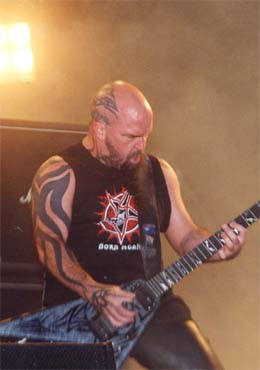 Because a utilitarian society has no need for internal principles of humans, treating them much like it does any other natural object and feeding them through a process exerting external influence on them to shape them to a rough replica of its ideal form, it has no equivalent for vir, which means that in defining vir, we split it between several balkanized categories of modern association with different aspects than are intended. We might say that it is an assertive, warlike spirit; but this only captures some of the definition, since it also includes self-confidence and an implacable calm when doing what one believes to be right. There is also an element of the creative, progenerative spirit, or the ability to - for example - encounter an empty continent and build there a civilization. In Nietzsche's definition, it is not the lion or the lamb, but both: the peace of mind that comes from being able to assert an order encouraging higher growth in man and surrounding nature. Vir is everything that a hero would be, including genius, and so if we must define it in modern tems, we'd call it closer to virility than to virtue, the latter being an adaptation of inner strength to an external Absolute moral rule, thus rendering the creative internal spirit impotent.
Probably the best expression of vir, albeit not by name, has been in literature. We can find in Dante's "Inferno" glimpses of this idea as his character struggles for a balance between heaven and earth in his own spirit, and ultimately leaves behind his cowardly judgmental, socialized persona in favor of something closer to the divine. Later, the same conceptual framework becomes apparent in the post-"Enlightenment" Romantic literature of England, France and Germany, where authors such as Percy Bysshe Shelley, John Keats and Lord Byron wrote poems extolling the virtues of the ancients, establishing an equilibrium with one's own mortality, and enjoying all of the unstable passions of life while remaining on a course for glory. These were contemplative, self-assertive poems, and overthrew the "individualism" of the time by asserting that the value in the individual was not the fact of the existence of another body in the world, but the spirit within that body - and that not all spirits were equal, as most were numb to the finer aspects of life and thus had lost their creative and adventurous outlook. This echoed the conflict between bureaucratic utilitarian society, which shapes humans through external forces, and the view of the ancients and Romantics alike, which was that people must shape themselves from within. Implicit in this attitude was a view of mortality which contrasted the Christian fear of it; mortality was seen as necessary, and a death in the pursuit of something worthwhile as not tragic, shifting the emphasis from preservation of the body to nurturing of the soul. This literary tradition continued up until the works of F. Scott Fitzgerald, William Faulkner and Ernest Hemingway, but appears to have become lost a decade before metal music was born.
she cloaks the world
in impenetrable darkness.
A chill rises
from the soil
and contaminates the air
suddenly...
life has new meaning.
- Dunkelheit, Burzum
Vir as a concept is not academic in nature; it is something one lives, and by which one dies; it is a value higher than preservation of life itself. When one considers the many branches of philosophy, namely ethics and metaphysics and aesthetics, it becomes apparent that these can be divided into roughly two categories: things that describe natural function, and things that recommend a particular function over another: values, in other words, or making preferences for a better design occur over the normal state of disorganization in life. Philosophy, like art, is a language, and among Indo-Europeans, vir is the only principle that can organize all of its parts into something that both describes and recommends. To a thinker in an ancient society, vir was the principle that caused nature to unleash a diversity of plants and animals onto the globe; vir was a thunderstorm, or the brutal chill of winter, shaping the land and its life for a more productive season. It was present in both the absurd fertility of spring and the vicious culling that left a predominance of the more adapted. Also, it was a recommendation for humans: this is the principle of your environment; act accordingly. From a purely academic viewpoint, it unified all philosophy around a central worldview which addresses the fundamental question of existence.
Whether born yesterday, or an older person, the individual faces a world in which many things happen, and some turn out positive for that individual, while others are negative. Herein is the reason humans philosophize. We live because to some degree, we believe in living, but it is a balance between emotions incurred by the positive and the negative aspects of life. In this the fundamental question of philosophy can be seen, which is, "Why do I live, and why is it that life includes negativity?" There are several approaches to this question:
(a) One can deny suffering. Whether through stoicism, or numbness, or a belief that the individual does not exist, one can minimize the value of suffering to the individual. However, when one destroys suffering in the representation of the world that every individual has, one also reduces the impact of joy, and thus a stable norm is achieved but great deeds, which require great passions and enjoyment of life, are stultified. The problem of far-east philosophies comes to mind here.
(b) One can embrace suffering. Self-pity is a fundamental notion to all humans, because by making the impact of suffering congratulatory to the individual, it allows the individual to endure suffering, but also converts the individual into a masochist. When this happens, the individual loses any higher impulse, and becomes fixated on the self and ways to keep it afloat through additional suffering and, as a palliative, reward, which usually takes the form of pity for others. This is the way of middle eastern religions, including Christianity.
(c) One can explain suffering, without finding a way to resolve the fact that it is real and its impact will inexorably be felt. In this view, one finds a reason that suffering exists, such as the notion that because there is negativity there is space for change, and that which is not fit for the future is eliminated. It is a naturalistic view, and this is common to all Pagan beliefs: they understand suffering as a mechanism by which nature maintains itself and encourages, gently when you consider how large the natural world is compared to the individual, the growth of individuals and species.
The only philosophy that expresses vir is (c), because in this one subsumes the role of suffering to that of a creative force, and thus does not lessen either suffering of joy, but finds it natural and right that one might pursue enjoyment (and what it encourages: creative achievement, whether writing better music or building bigger banquet halls) and also experience suffering. There is no need or ability to explain away suffering; suffering is simply suffering, or negativity, associated with empty spaces and "clearing" forces such as winter and death. The individual following this philosophy must accept that some things, such as mortality and suffering, are part of life as a whole, and while the individual will suffer and die, the whole will continue and it is right that it do so, because the whole is the source of both the individual and enjoyment.
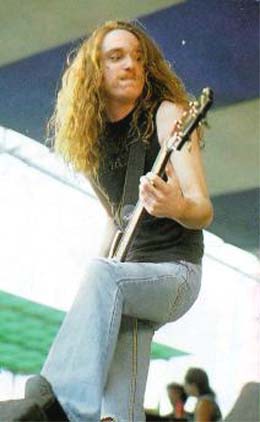 This is a philosophy for strong people; one must overcome emotional reaction as well as the desire to nullify all feeling, and must forge ahead knowing that casualties await. It is for this reason that the ancients considered their philosophy to be heroic in nature, as it exemplified the human struggling for something better, something more creative, despite great sadness and loss and tragedy. It is in this spirit alone that one transcends suffering by accepting it as part of something greater than the individual, and thus by not fixating on suffering one is able to see life as a balance between suffering and enjoyment that produces the groundwork of future enjoyment (as well as, alas, suffering).
Metal expresses this philosophy in a range of ways. In the heavy metal days, it was an assertion of a procreative and masculine sense of individual freedom with no care for tomorrow or the consequences of one's actions; "I do what I do because I will it, and because I enjoy it, and negative consequences are inevitable so I don't worry about them" is a summary of this belief. Accordingly, imagery of classical civilization, virile societies like National Socialist Germany, and even simplistic statements like "You'd better watch, 'cause I'm a war machine" (Kiss) permeated heavy metal. With speed metal, this philosophy became somewhat intellectualized and over-emotional, perhaps because of influence of liberal democratic thought, and is best seen in Sepultura's "Inner Self," Metallica's "Escape," and Slayer's "Evil Has No Boundaries". Ultimately, death metal and black metal took this in a more Romanticist direction, embracing mortality as having meaning, and using the symbolism of both wolves and warriors to hammer home the idea that the weak dying and the strong surviving is not only natural, but the only way out of a conformist modern society which breeds people best suited for filing papers, talking about how "progressive" recent products are, watching TV and eating pre-prepared foods from microwaved boxes.
C. Classical Ideas in Metal
Before the moral democratic society, there was the classical age of Greece and Rome and Scandinavia and before them, India. During these times, morality was suppressed in favor of vir and other naturalistic collectivist principles (morality is designed to protect the individual, where vir is designed to promote health in society and surrounding nature as a whole), and these values continued up until very recently in Indo-European societies in Europe and the United States. For this reason, it makes sense to trace metal's philosophy through the ideas of its parent culture, that of Indo-European art and culture. The following are generalized ideas seen in both traditions.
Because of its fear of metal, and its consequent refusal to believe there is artistic spirit or meaning behind "rebellion music" of this type, mainstream society and the academics who write on metal have apparently not observed these correlations, but to those who study classical music and then are fortunate enough to be exposed to the intelligent (not Cannibal Corpse, Pantera or Cradle of Filth) metal, these similarities are too much to ignore.
IV. Rebirth
As of this writing, metal is at a crossroads, since black metal has faded into populism and generic loudness and nothing has emerged to take its place. It is possible that black metal will be the last stage of metal, since it has by evolving from loud rock into a unique artform expressed its fundamental beliefs and has nowhere left to "innovate," although it could devote time to - much like Romantic poets - celebrating the culture it has established, and thus move from the political and philosophical to the range of art which simply celebrates life, in doing so expressing its politics and philosophy by virtue of the ideals it finds in art. The most positive view of this situation presupposes that metal will, having "grown up" to full possession of its ideals, after a short lull, be reborn.
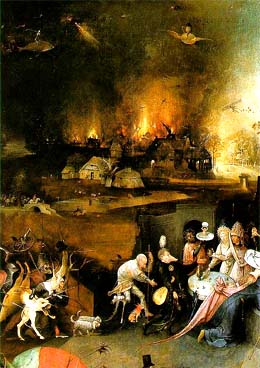 Between metal movements in the past, there were lulls almost as entropic as the current "black hardcore" and "nu-metal" fads, although these were not as pronounced since it was clear that the genre had not as of yet achieved self-articulation. Once heavy metal had birthed its champions, it degenerated into "stadium rock" for the later years of the 1970s, setting new records for vapidity and moronic populism. Speed metal took over, and within seven years had spent its own inertia, leaving the genre to Pantera and Helmet; after that brief void, death metal rose and came to predominance by the early 1990s, then rapidly faded into repetition and self-parody, at which point the nascent "modern" black metal movement took hold and ran for a good five years until, in late 1996, it became apparent that it had become populated with imitators and, excepting a few albums by already-established bands (and traditionalists such as Averse Sefira and Yamatu), was defunct as an artistic movement, although "just gaining momentum!" as a popular, plastic-disc-selling one.
However, these lulls were short and momentum carried between them; it is alarming to see how the lifespan of a metal genre has decreased from nine years (1969-1978, with heavy metal) to seven years (1981-1988, with speed metal, and 1985-1992, with death metal ) to five years (1990-1995, with black metal). What comes next will be crucial, and what follows in this article are analytical suggestions for how it might use the languages of art and philosophy to create traditional Indo-European sonic art in a form new to both metal and mainstream music. Metal is best when it requires an independent mind to even become involved with it, and to figure out some way of stating an unclear idea with strong associations in ideas that have been eternally revered by the strong; when it is a cookie-cutter template, it is easily cloned, which is why future genres should perhaps veer away from rock standards of musicianship to something akin to progressive rock, except more esoteric in use of narrative themes. It is necessary that black metal die, and fighting that death is like fighting the decay of larger society, futility. A more sensible course of action is to create something new which upholds these ancient values of Indo-European culture, and for metalheads waiting for the "next big thing" to instead listen to Beethoven.
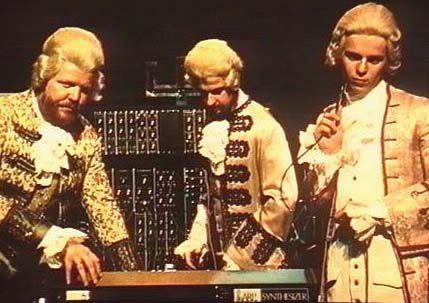
Taken together, these styles approximate a popular music version of the traditional music of Indo-European cultures, and are distinct from the cosmopolitan types of popular rock, jazz, funk, rap, techno and blues. They easily incorporate the popular music of another era, now called "roots music" and "folk music" and "world music," which is more sensible as in composition and spirit is is closer to metal than other genres (country is heavily inspired by this music, which makes the Metallica country-metal fusion interesting on a musicological level, even if fairly bland listening). By unifying itself around a philosophy as expressed in music, metal can end the evolutionary period that culminated in black metal and move into being an independent genre with a long future that does not require "innovation" or novelty to uphold the values its finds eternally powerful.