Black Metal, Death Metal, Grindcore, Thrash and Heavy Metal Reviews from the net's original Heavy Metal site

Metal Genres

Death Metal Black Metal Grindcore Thrash Speed Metal Heavy Metal

Metal Music

Heavy Metal F.A.Q. Interviews Philosophy Metal Concerts Heavy Metal CDs Heavy Metal MP3s

Metal Media

Articles Heavy Metal Zines Heavy Metal Video Heavy Metal Books Metal Links

Metal Community

About Contact Metal Forum Letters Mailing List
BLACK   |   DEATH   |   HEAVY   |   SPEED   |   THRASH   |   GRIND

METAL INFLUENCES

Heavy metal is not rock. It rose out of popular music as much as popular music rose from an amalgam of folk music, middle eastern music, and pop classical. Like the best thinkers in human history, metal got where it is by moving against the grain, by realizing that the crowd is always wrong and that most music is an aggregate of what failed not what succeeded by being distinct. There are some notable exceptions in mainstream music and here we list the acts, rock and otherwise, that both influenced heavy metal -- and were influenced by heavy metal, black metal, death metal, grindcore and dark metal.

ROCK

the Doors
King Crimson
My Bloody Valentine

PUNK HARDCORE

Amebix
Cro-Mags
Disfear
Discharge

INDUSTRIAL AND AMBIENT

Dead Can Dance
Killing Joke
Kraftwerk
Lord Wind

CLASSICAL AND SOUNDTRACK

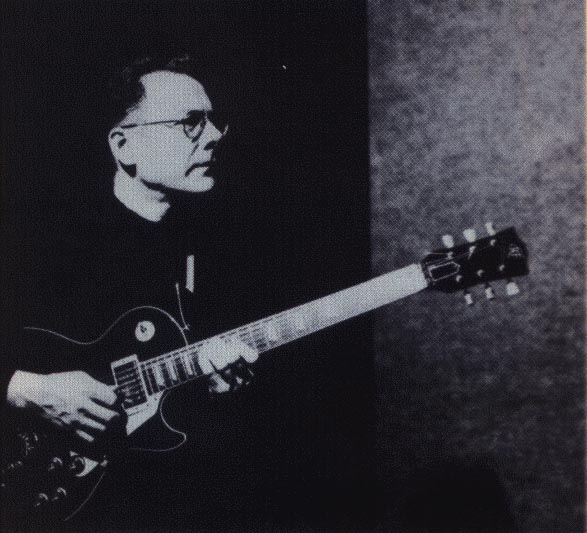
Heavy Metal Influences: King Crimson's Robert Fripp
Death Metal and Black Metal Search Engine

Hypocrisy - A Taste of Extreme Divinity

Thursday 29 October 2009 at 12:32 am

Like the previous Hail of Bullets, Pestilence and Seance albums, the new Hypocrisy is an attempt to retain old-school death metal cred while putting out an "updated" and "contemporary" style. If you cut through all the marketing and bloviation by inexperienced fans, you'll see this for what it is: Behemoth-style metalcore.

A Taste of Extreme Divinity, like most things that rank appearance over content, uses a formula which is designed to wow you with its slick style so that you fail to notice it's a collection of random riffs that sound good if you're not paying attention to the rest of the song. Fast melodic riff, then a doubletime stomp, then a breakdown with a Gothenburg riff, than nu-hardcore style rant and blast; repeat in random order.

Add rattletrap triggered drumming that overplays its technique every time, and wrap the whole thing in semi-synthesized "digital whisper" vocals. If you look at how this music is composed, you'll see that it is "embellished" verse/chorus constructions where the band designs two riffs of radically different types to serve as verse and chorus, then adds in slight rhythmic variations and purely random diversions. This style of composition is the basis of rock and punk, but not death metal. In fact, it's the opposite of death metal, which tries to make a series of riffs express an expanding similarity even though they appear radically disparate.

The oldest con in the world is mixing some even older stuff into the old, repackaging it and calling it new. With this album, Hypocrisy are trying stuff that was old even in the days of extreme death metal, but people figured the audience was too savvy for tricks that didn't even work with the hardcore kids. But now, few remember that old spirit, and those that do get shouted down by a new audience that's delighted with anything new and easily digestible.

This CD is easily digestible. It is easily listened to. Nothing requires more commitment than putting your brain on hold, and paying attention to only one riff at a time. That way, each riff sounds kind of interesting. It's only when you try to put them together into songs you realize this CD is like computer-generated text: it makes sense grammatically, but says nothing.

They finally found a way to assimilate metal into rock music. Get rid of the structure, dress up the production and really hammer out the violent riffs that just scream "metal!" even if they're more closely related to Destruction and Exodus than death metal. Then convince everyone this carnival music is extreme because it's random, fast and loud.

But we the discerning listeners -- who value our time, and know that we get only one life so we take our music like every other aspect of our lives quite seriously -- find ourselves nodding off. This is like Britney Spears on meth, repeating the same few lines over and over again until we all rush to escape the room from sheer existential boredom.

In other words, it's metalcore.

Sadistic Metal Reviews 10-18-09

Sunday 18 October 2009 at 9:20 pm God is love, they tell me, and that universal brotherhood is the way to peace and happiness. But I'd rather have answers than peace, and I'd rather have really intense peaks of experience than absence from conflict. This is most true in music: absence of hatred, war, chaos, loss, tragedy, sodomy and demons means boredom and lots of twee "mixed emotions" poignant ironic dweeb-rock that some scenester in plaid and chains is going to lord over me like the hidden magics of Merlin. Attention hipsters: your music isn't special. In fact, you're only pretending it's special because it's not and you want a reason to feel really cool and to try to make me feel like the dweeb. But then again, I'm not the one wearing an ironic ensemble designed to tell the world I'm not a sheep. Because telling the world you're not a sheep is not only transparent, it's also one good way to get trolled by a large corporation. We're here to dodge the sheep/anti-sheep dichotomy and just look for interesting music. Welcome again to Sadistic Metal Reviews.


Iron Age - The Sleeping Eye

Many things have two masters, but this band has two souls. The first sounds a lot like Manilla Road, with more of the aggression of later Destruction and the progressive vibe of Atrophy, with the nu-hardcore vocals of later At the Gates. The second is early alt/indie progressive speed and doom metal that sounds like a cross between Sabbat (UK) and St. Vitus, or any of the doomy hard-rock influenced bands like Sacrilege ("Turn Back Trilobite"). Lead guitar is the real standout, with solos that seem to wander around the obvious but chart a path right for the major theme and then spell it out offhandedly, as if unveiling a card trick, without losing the musician's sense of spirit and audience that keeps them from being gimmick. Riffs are more of the European style, with one or two chords offset against a rhythm played in fairly inconsequential chords or open strings. From this the band modulates into its second soul, one in which a good Sabbathian doom riff must play out evenly against a changing backdrop of tempo, which through its permutations selects variations and complements to that theme. Compared to underground metal, this sounds sparse and somewhat like a Model T, with tempos and architectures of an earlier time. However, it's quite good and puts both most doom metal bands and most speed metal bands from the post-1994 era to shame.


Evoken - Antithesis of Light

From the epic doom category inhabited by Skepticism and Disembowelment, Evoken make dark long slow heavy metal with melodic underpinnings and plenty of slow chords and arpeggios. They create as a result a mood of lightness and suspension of belief in the midst of a glacial motion, grinding forward into minor key melodies. On the whole, it is lighter and more conventional heavy metal than Skepticism, which is its closest stylistic cousin. The music is good but not particularly compelling.


Wardruna - Runaljod - Gap Var Ginnunga

Remember how hippies used to gather at any kind of "cultural" event to play music, and how, just like with the Grateful Dead, it was impossible to tell the difference between songs? Wardruna updates the hippie model by using traditional Norse instruments and chants in what are basically organic dub pieces. Organized around a beat, they grow through layers of vocals, jawharp, and other instruments, but layers come and go in a cyclic pattern which means that at some point the dub fades toward the horizon. It's a neat experiment but not very listenable, mainly because in order to keep content bland, it does not let these songs breathe or grow.


Hopewell - Good Good Desperation

Technically, I s'pose, this is post-rock. Really it's just a very cool updated hippie jam from the 1970s. Think MC5 in collision with the Grateful Dead as if executed by Motorhead and you get the general idea. Advantages are that it's instrumentally dense rock music that's still easy to listen to; downside is that it's still stranded in rock 'n roll land where everything must bounce and be dramatic. This sort of kills the overall dynamic. Parts of this are a David Bowie love fest, and other parts are reminiscent of a dark rock version of Sisters of Mercy. But on the whole, the bouncy ironic party atmosphere -- like Talking Heads colliding with Faith No More -- swallows up everything else, reducing it to a predictable cycle.


Caspian - Tertia

Post-rock with few vocal additions that works at building a mood through ambient repetition, using layers sparsely and mostly working a noisy but gentle mantle of sound, this CD is one of my recent favorites -- for background use. It's not too dissimilar to the forest style of black metal where you have droning riffs build up, then a solo that sounds designed for traditional instruments, and a slow fading away. It's also very close to guitar ambient like Robert Fripp, but with active drums in the background and frequent use of punk/black metal/shoegaze hybrid riffs. It's soft like a fountain in a garden, sweet like that well-intentioned nerd who tried to take your sister to a date at the Natural History museum, but also, kind of boring on repeated listening.


Meshuggah - Contradictions Collapse

With all the attention given to retro speed metal, it's important to mention the best releases from Meshuggah. Clearly this band always intended to work jazzy technique into Metallica-style speed metal with Prong influences, meaning a more flexible sense of rhythm and harmony, in addition to a death metal-descended vigorous riff salad that often re-uses riffs at different tempos or broken into puzzle pieces and reassembled in different order and scalar direction. Solos are the kind of diminished scale, oblique harmony noodling that made jazz fusion fun for the first few years. There's a bit of bombastic bounce in the Exhorder/Pantera style of howling verses and riot shout choruses, which makes this album sound dated. I can also pick up Destruction and Nuclear Assault influences. Hetfield influenced these vocals. This is by far the best thing this band have done because it shows them at their most honest making music they'd like to hear and judging by the subtlety of it relative to their later works, this was the last time they were freed from a cynical vision of their audience as wankers who love anything that sounds "technical" as it builds up their own egos. Other than the style being abrasively 1980s I'd listen to this, which I cannot say for anything else this band did save None, their EP before they got fully cynical and dollar sign oriented.


Heaven and Hell - The Devil You Know

This album represents a huge improvement on other Sabbath-related efforts over the last decade. Borrowing a page from the AC/DC book, it focuses on simple rhythms and movie soundtrack "epic" riffs mixed in with the heavy metal standards. Lyrics manage to capture a sense of the vaguely sinister and ironic, and vocalist Ronnie James Dio delivers them with even-handed clarity and force. The magical sense of songs developing into some protean animal unknown to their origins is not here, but the full dose of classic heavy metal feel with the relentless energy of contemporary AOR makes up for it. Instrumentalism is reined back; Iommi's solos are fragmentary and cut from whole cloth, and bass follows guitar, which sticks to middle-of-the-road power chord riffs, but the result is not bad. It's easy to listen to and enjoy with half a brain, and for that has some pleasant melodies and rhythms, all while keeping an almost trademark heavy metal sense of obsession with the dark, conspiratorial, occult, and inverted symbols. If you can imagine Mob Rules hybridized with Blow Up Your Video with a touch of Motorhead at the fringes, you can see why this album has more appeal than the hidebound retro attempts of other classic bands.


Lugubrum - Winterstones

We all try to like this. It's Burzum-technique applied to a doom metal band. So it trudges, then picks us up with a little melody, then goes back into the deep harmony. Again and again. Without making any really clear points, or showing us an adventure not of our own projection. So after awhile, hey look what's on TV -- you know, they're showing those commercials again with the annoying chick with the hipster hair. I was doing something, and there's some kind of music on in the background, but it seems really generic. What the heck? Oh, Lugubrum. Not a bad effort but nothing I want to hear again. This artist needs to take some risks and show us what's in his/her/its soul.


Christ Inversion - Obey the Will of Hell

The musicians behind this demo studied their black metal well, but never quite figured out how the composition of the music differs from regular old heavy metal and punk. There's too much emphasis on verse/chorus structures in the punk style, and leaning on harmonic "sweet spots" with trudging repetition the way heavy metal makes choruses, ending up with something that sounds very much not like black metal. Songs are pretty basic and relatively musical but not memorable. Vocals are pitch-shifted and irritating, and riffs show a ton of BEHERIT influence but none of the grace. I guess it's OK. I also guess I don't care since I can find 400,000 demos that meet this description.


Land of Kush - Against the Day

After a lengthy 1970s ambient noise track from which you can smell the idealism and psilocybin lifting like a cloud of morning fog, this band detours into spacious ambient rock with chanted murmur vocals over insistent beats with serial changes and extensive instrumental soloing. This is enjoyable to listen to but it's hard to imagine putting on except as background reality tuning, which it does well: dropping us into the hopeful deconstruction of the 1970s with the savvy layering of our contemporaries. It's like Morcheeba without the affected digital disco urban funk.


General Surgery - Corpus in Extremis

It's unlikely the broom will ever evolve beyond what it is now and has been for a thousand years. For certain needs, the response doesn't need to change. General Surgery have tried to escape being a Carcass tribute band by shifting their vocals to later Carcass style and trying the modern death metal thing, which basically means death metal that writes its songs like metalcore and tries to distract/annoy like nu-metal does. There's a lot of tribute to the old school in various riffs, but just as much tribute to sped up heavy metal and modern metal. It reminds me of the recent Seance and fails for the same reasons: too busy, too ambivalent about its own style and lacking any kind of refinement of message to an insightful, profound, gradually-revealing passage through experience transferred.


Eyes of Ligeia - What the Moon Brings

In that interesting intersection of indie rock and doom metal, Eyes of Ligeia is a veteran I remember first appearing in the middle 1990s -- and to their credit, they're making the same style of music but have improved it in every way over the years. Not many bands are able to define what they want and then instead of getting wide-eyed with trying to make their style fit an audience, divert their energies toward making their content and form mate each other more ideally. Eyes of Ligeia drone quitely under rasping black metal vocals, using either carefully picked open chord riffs or power chord earthmover doom riffs, but using both in complementary pairs with background keyboards that provide a deepening sense of mood. Reminiscent of ritual music, this repeating loop of sound produces a hanging atmosphere like overtones to a chord slowed down to the milisecond scale. For many of us, appreciation of this band is natural even if we find the sub-genre -- doom metal -- to be too repetitive for our tastes.


The Chariot - Wars and Rumors of Wars

Thrash bands broke into two groups, the punk-style and the metal-style, although both were mixes of metal and punk.Same way with metalcore: ranty, new style hardcore defines the sound of this metalcore band. The "core" in hardcore comes from the love of abrupt riff changes and random riff combinations, with really enigmatic choruses, and here it's put to good use so that we hear loud angry ranting that changes abruptly like a car wreck, then there's a recognizable pseudo-emo chorus. Do we need another band like this?


Drudkh - Microcosmos

Boring candy. That's what you need to know. Every part of this CD sounds sweet, but it's also boring as hell because like music they play in grocery stores, there's no change in mood. There is no journey in these songs. They turn on; there's a mood; they throw in all sorts of stuff to obscure the fact that it's static and dimensionless; then it ends. Sum total change in outlook: nothing. It's Britney Spears, like Aura Noir without the aggression. Notice how heavy metal shredder guitar coexists with Burzum derivations, Graveland folkish parts, and the occasional prog metal riff. And then a cheesy heavy metal solo that meanders. What does it mean? It's the anti-meaning, which is to say there's no direction other than self-reference. That's why it's boring. It's candy because these are like pop songs very pendulum-like in their transition between recognized forms of non-threatening order. The prog parts remind me of Kong, the black metal parts of Abyssic Hate and Ved Buens Ende crossed.


Brutal Truth - Evolution Through Revolution

Like Sounds of the Animal Kingdom, this album shows Brutal Truth with more refined technique but a lack of gestalt that decreases the status of this album as something pushing a genre forward. Instead, it's waving the flag but does so without finding an angle of its own on the genre, so it ends up being standard grindcore played with Brutal Truth technique by arguably the most proficient musicians in the genre. There are moments of sheer brilliance in riffology, and the cynical nature of these songs more resembles early DRI than the boiled tasteless political partisanship of recent grindcore, but nothing is going to really floor you despite having many powerful aspects.


Teitanblood - Seven Chalices

After everyone in the underground was done praising this new work as a resurrection of the spirit of the 1980s, there was a brief lapse in the hype as people re-thought their extravagant praise. Now it's time for some reviewer to come along and haul out two names: Deathspell Omega, and Blasphemy. This CD doesn't sound anything like Deathspell Omega, but it uses the same tactic of working its aesthetic like a Hollywood fashion designer. Lush layered voices, monastic chants, interludes and lots of guitar noise during songs make this "sound like" (to our conscious minds) it has depth, richness, different experience. But like Deathspell Omega, once you strip away all that art director frippery, you find a pretty ordinary CD. In Deathspell Omega's case, it's a long-melody fetish derived from early Ancient. In Teitanblood's case, it's a desire to use Bathory's ideas, especially vocal ideas, in a form of death metal that emphasizes doomy passages alternating with a slamming interruption of cadence. The result is laborious. Get ready to let your monkey brain get distracted by the aesthetic while very unexceptional music bleats on by like a stream


Tragedy - Nerve Damage

People kept hearing me listen to Transilvanian Hunger and they'd say, "No way dude, you need to check out Tragedy, they started this style." I have come to the conclusion that they never heard Discharge, GBH or Sarcofago; however, they're partially correct. Tragedy is a very metal-oriented take on what it would sound like if Disfear covered a whole bunch of Blink 182, Offspring, Ramones and Sex Pistols songs. These are melodic bouncy punk that eschews the UK82 stylings for rock-style pocket drumming and Motorhead vocals with emo chord progressions melded into standard punk. Harmonically, it's rock music on a series of power chord shapes. Structurally, it's sugar pop with a big dose of AC/DC and old punk. For this type of music, it's great and extremely catchy and fun listening, but it's going to bore anyone who got into Transilvanian Hunger or Tangerine Dream (its inspiration) and grasped how much a non-linear atmosphere expands the enjoyment of music.


TheSyre - Exist!

This CD has absolutely nothing to do with black metal and death metal. I would style it instead as a hybrid between later Metallica, Amebix and Strapping Young Lad. Most of it is speed metal riffs that ride a bouncy rhythmic pocket, then deviate into harmonically oblique fretruns borrowed from the classic days of metal and rock but informed with an odd, rock-opera sensibility that gives each one place in an evolving narrative. As a reviewer, I have avoided this band for years because for the most part I avoid speed metal, and this is very speed metal in a style like a crossing of ...And Justice for All with Kill 'Em All: hard-edged muted-strum riffs rebounding from a bold heartbeat rhythm. The odd uses of harmony are SYL-ish, but the Motorhead-cum-Exploited vocals are pure Amebix as is the expanded but theatrical song structure to this thirty-two minute piece. If this recording has an undiscovered strength, it is its ability to make refreshing and new some classic riff patterns and put them into complex songs; if it has a weakness, it's that like Amebix, it divides up its epics with aesthetic elements like sound samples and rhythmic pauses, and so doesn't achieve the degree of musical integration it might like.


Orthrus - Tyrants of Deception

Imagine if Helstar, Forbidden and Coroner had a big orgy and decided to spawn an offspring with death metal vocals and speed but the German-inspired speed metal of the late 1980s. Within that context, this CD plays it right down the middle: nothing new, but well-executed, if not ambitious enough to make you reach for it again.


Pest - Rest In Morbid Darkness

This is the most schizophrenic band heard recently. It thinks it's black metal, but really it's head cheese made of ground up Slayer riffs with big thick chunks of heavy metal, speed metal and underground remnants. It's good if you listen to each riff, but not really distinctive, and after a few tracks it becomes clear there's no direction other than upholding an already well-known form.


Nagelfar - Hunengrab Im Herbst

Melodic black metal. They nailed the technique, but then wrapped it around very linear songs. They avoid carnival music, but don't make it beyond one dimension of mood. Semi-comical vocals also make this dismal, as do recycled riff styles from speed metal.


Necromantia - The Sound of Lucifer Storming Heaven

This immensely creative music uses black metal vocals but is basically Judas Priest styled heavy metal with a dose of Queen or maybe Vangelis to give it an epic character. It is admirable for its variation and mastery of the rock/heavy metal form, but might not appeal to underground listeners.


Solis Aeterna - Sol Triumphalis

If you can imagine Lord Wind with simpler instrumentation and longer phases of repetition, you can visualize the style of this entry project, although it has a worldview all its own. What makes this enjoyable is that it attacks with the bombast of a movie soundtrack, but then dissipates until it resembles a background drone. The objective seems to be a mental tuning of the listener toward moods in which one can appreciate the eternal. Like Burzum's Baldr's Dod, Solis Aeterna applies entry-level synthesizer sequencing skills to layers of background rhythm and slow-changing tones, over which lead keyboards riff in rough time with the tribal drums. This project will improve in clarity as time goes on, but it might be best for simply unfocusing the mind as if listening to rain at midnight.


Incest - Misogyny

This Texas band produced one demo and then vanished. They attempted to make avantgarde death metal in a style like Timeghoul and Goatlord colliding with Nuclear Death in the wings. Vocals are from the "stand back ten feet and howl at the mike" variety, and drums are surging bashing in the punk style, but guitars make spidery lead riffs wend their way between the punchier power-chorded material. There are many attempts to mix melodic riffing with more putrescent, organic rhythms, and a desire to make song structures that interrupt the cycling of riff and chorus with a series of breaks to interludes which make good use of the aforementioned melodic proggishness. This is more interesting than all but a few things we get sent yearly, but it never really manages to take wing because it comes across more as a theatre of the violent and maladjusted than something we'd want to listen to, and the lack of melodic development reduces each song to a circularity of the inconsistent. Still, I wish they'd developed this further as there's potential here.


Crematory - Wrath from the Unknown

People have always talked about how important this band is, but it -- sounding like Obscurity, Lobotomy, Suffer or Grave -- resembles some of the more battering and simplistic Swedish death metal, meaning that this is almost purely rhythm riffing with little melodic or harmonic organization, and as a result, songs are unified around the synchronicity between a slower rhythm and a series of faster ones. Like the heavy American bands, Crematory favor trudging and pounding patterns with lots of walk-up and breakdown action in the middle, battering us about with the change in tempo and rhythm but in a desperate bid to be nihilistic reducing music to the threshold of simplicity. While it is not bad for that style, it is also completely uninspiring in light of the better options out there.


Actors and Actresses - Arrows

This is indie rock shaped into shoegaze with the pace of a modern jazz band, like an early version of REM playing through the haze of Ride while covering the slower songs from Sting or a postmodern Dizzy Gillespie. The major asset here, besides musicians who can do coffeehouse sparse without coming across as dead air merchants, is the purring Morrisonian vocal track, which guides us all like a hypnotic trailblazer through this forest of pop sounds reformed. It is calming, however.


Mutiilation - Sorrow Galaxies

Someone decided to make the Hollywood version of a Mutiilation album. Instead of those long, deepending moods, we've now got carnival music, that like carnivals tries to distract you with something new and unrelated every second. It's like walking between the stalls at a state fair: here's a roundabout riff, then the bumper cars, then a droning Drudkh-style black metal riff, then the fortune teller, then a Burzumy moment -- and a break for cotton candy -- then back to the circular passage through songs. These are very sing-song, pleasant and not dark at all. It's questionable why you'd listen to them since you can get the same thing from Dimmu Borgir with better production and keyboards.


Gorefest - Rise to Ruin

Let me up out of this one, O narrator. No matter what people claim is "new" in metal, it always sucks and involves simpler, catchier rhythms and more rock 'n roll touches. This CD is no exception. It's chock full of two chord riffs that feature a lot of repetition and sudden reversal in a rhythmic hook, and then a sort of extended jam session in the middle. Like all bad metal, everything is calibrated to the ranting, riot shout pace of the vocalist, which might "work" for Sepultura's Chaos A.D. but here just dumbs down a great band. It's death metal if you mix it with Led Zeppelin and a crowd chanting for free bread. While no part is horrible, the sensation of listening to all of it is dizzying numbness of the forebrain.


Voivod - Infini

No one wants to give this thing a bad review because it's like kicking Piggy, Voivod's dead guitarist, when he's down. However, it's painful to listen to this thing. It sounds like Motorhead, updated through Prong, covering the Doors. Lots of really dramatic vocals, rhythmic riffs like boots scudding across a waxed floor, jaunty choruses, and occasional flashes of the lush dense chording that once defined Voivod. Percussive structure is equal parts plain and dramatic. Anytime you find yourself zoned out on the fairly unexciting riffs and the Nirvana-ish whiny vocals, there's a constant pounding drum to remind you that you're listening to music and you-are-glad-you-paid-for-it. Piggy was brilliant; some of the work on this is almost to that level; however, Voivod was heading downward since Negatron and this album continues the fall.


Dawnbringer - Sacrament

While this band is compared to At the Gates, a better comparison would be to Children of Bodom hybridized with Aurora Borealis. Chord progressions are very indie rock and technique comes from decades of melodic metal, while vocals sound like Motorhead, but the whole package would be more at home in the pop genre than metal. Simple-hearted melodies are in themselves good for their three-note span, but melodic development gets either so gratifying it's impossible to appreciate, or is so predictable the other shoe dropped before the first. Nothing in particular to dislike here, but no reason to hunt it down.


Sick - Satanism Sickness Solitude

Very basic black/death metal written as if it were punk music, with simple loops of verse and chorus riffs, Sick incorporate some cyber elements like samples and vocoder but are essentially really basic metal not much changed from the early days of Metallica. While they do better than average at being this type of band, nothing really memorable stands out here, not just stylistically but compositionally -- we've heard these combinations of notes and rhythms before, and no amount of "industrial" touches or even 400 lb transvetite divas could save us from the ordinariness of this offering.


Cryptic - Once Holy Realm

This is death metal made to sound like black metal, and it has a lot more common with a faster rippling less percussive version of standard Tampa metal than any esoteric origins. Melodic riffing fits into this framework, as does as a blackmetal rhythm, but song structures are closer to death metal riff salad and notes seem to be picked from very evident progressions. Like most reviews, this one concludes with "you won't miss anything."


Textures - Drawing Circles

Abstract song titles, cool conceptual name, obviously a lot of power thrown into production -- oh hai, it's post-Cynic "post-metal" metalcore that is like a cross between Jawbreaker and Spyro Gyra. And I really wanted to like this. The hackneyed punk riffs meet the hackneyed metal riffs and then explode into jazz-fusion cliches with angry Phil Anselmo(tm) vocals ranting over the whole mess. It would be impossible to give less of a shit. Where do the metalheads who like progressive/technical music go? This stuff has little in common with metal; it's basically punk rock in that later quasi-emo style (Jawbreaker) with a lot of Pantera and nu-metal mixed in with the technical influences. That isn't a direction, and you need to have a direction to articulate anything worthy enough of technicality.


Amorphis - Tuonela

This album is painful because it's so well-executed, but so soulless and comical. It's basic rock music that slightly reminds me of VNV Nation because Amorphis use picking of high notes in the background to highlight bassier foreground riffs, like if U2's The Edge started taking on the sequenced keyboard trills VNV use in the background of their songs. There is something in the Scandinavian mentality that has them living in a paradise of social order, and longing for the grittier, weirder world of rock. Here it manifests itself in a stadium heavy metal version of the same kind of odd, introspective indie rock found on Quorthon's "album." They can't quite leave metal behind, or underground metal at least, but want to make this really edgy (no pun intended) indie rock. On a musical level, it's not particularly exceptional but is well-composed and can stand shoulder-to-shoulder with the big bands for mastering the art of songwriting that makes a crowd get together and enjoy the music. Lots of bluesy solos, and odd honky-tonk keyboards overlay this busy, bombastic somewhat sentimental music. I can't stand it but when I take my car in for an oil change, I'd prefer to hear this over the radio heavy metal in the newer, jump-metal style. But compared to classic Amorphis, on the level of expressing something artistic that is not caught up in the desires and confusions of the individuals and sees a transcendent picture of reality... this is a train wreck.


Magnum Carnage - More Unreal Than a Box of Precious Metal and Radioactive Ore

It's hard not to like this audaciously homebrew release. If you can imagine an American version of Carcariass, meaning fast chaotic melodic heavy metal with death and black metal stylings, that's what you'd have here. It's more American -- like a hybrid between North and South American types -- in that it throws everything it can into each song and likes really abrupt breaks between genre influences. Sometimes it sounds like the Doors, sometimes it's Judas Priest ("Painkiller" era), sometimes Led Zeppelin and then equally as frequently, a hybrid between Fallen Christ, Angel Corpse and Dissection. Mostly it's a showcase for extremely interesting solos, fast riffs and some deft harmonic changes that give the listener the sense of a pit dropping out beneath the music and then a new pseudopod of sound rising from within it.


Gifts from Enola - From Fathoms

Let's make one thing clear: one variant of post-rock is "techno played on guitars." That means a layered style of composition, where themes are introduced and overlap to make patterns of their combination, and their coming and going has emotional significance. It's an effective method. However, it's also one that's prone to formula since with the riff-length available to popular music, it means very simple three note fragments and literal-key soloing, which over time runs out of tricks. Gifts From Enola start with a swingin' rhythm, and slowly add stuff in the mix so you can watch the colors change much as you would when cooking with a dough mixer. Watch the cinnamon red mix into the beige! See what happens as the egg dulls the ochre! It's not bad but it aims for an atmosphere, and achieves degrees of lessening or intensifying, but beyond that, it is limited: the goal was not dynamic change but dynamic change serving the goal of a relatively static, semi-ritualistic emotional conditioning. It's not terrible at all but like much music that tries to replace structure with creative repetition, rapidly becomes static. The surface creativity of this album is amazing as they blend sounds from pure noise to post-punk/emo guitar work to a dozen popular music genres including the world's first disco grindcore, but underneath it is basically the same stuff we've been choking down since 1931. What's nice about it: no vocals.


The Syre - Resistance

By casting aside any sense of genre allegiance, this French Canadian powerhouse have made their best album to date: equal parts indie, bluegrass, punk, oi, Motorhead-style metal and Devin Townsend or Probot style experimental material, this CD like a minstrel show adopts the guise of its influences to act out a theatrical journey through the different modes of human thought. Dominating by its rapidly changing aesthetic, this album is a concept piece that's every bit as foot-tapping as Amesoeurs but has the raw aggression and bouncy determination of bands like Revenge or the aforementioned Motorhead. Clearly a lot of thought went into this. Its music does not aim to be groundbreaking, but like a concept album or modern folk, tries to unite theatre and music with idea and create an almost Jungian symbolism of the same. For those looking for an alternative to the now-hackneyed black metal, this is a deliverance in a form where one wouldn't think to look.

Sadist - Sadist

Wednesday 14 October 2009 at 11:27 am Reading through the comments on this blog, I hit upon a good hearty laugh. Not a cruel laugh, as in, "I can't believe how stupid these people are." A hearty laugh, that happens when one sees something healthy but absurd, which is what I see in the constant battle going on in our comments. Every time someone posts a self-deluded statement that clearly originated in label marketing or the pretense of a small ingroup of either "open-minded" or "true" fans, someone else fights back with something more intelligent and humorous. That's health: constant war against the delusion that keeps us, as a species, solipsistic. And it's funny. I don't know of another metal blog which can make me laugh like that, and it's all because of you, our readers, flamers, defenders, haters and player haters.

I also find it amusing that many people, upon reading what we have posted here, assume we're anti-progressive death metal. People note how much we squirt used nutrients all over Opeth, the latest Cynic or abortions of taste like Origin, and in order to justify their outrage, claim we don't like prog metal. In fact, the opposite is true: we love prog metal, and go hog wild for bands like Atheist, Obliveon, Voivod, Gorguts and Pestilence. We even love classics of alternative progressive metal like Supuration. But what we don't like is pose-prog, which is music that "sounds" progressive but is actually at blockhead levels of disorganization. Like Opeth. Like the new Cynic. Fake prog is bad prog, and because anyone who tries fake prog is probably a delusional and deceptive moron, is also usually bad music.

Today's band isn't death metal, and it's "progressive lite" like Rush, in that there are difficult techniques and longer compositions at work, but not as much theoretical squirreling around key signature. From Italy, Sadist are a progressive death-ish metal band who love their keyboards, acoustic interludes and longer songs -- just like Opeth. And like Cynic, they incorporate a ton of jazz-fusion technique, most notably in drums and bass.


On the whole, Sadist's self-titled album is a lot like Obliveon's "Nemesis": beaucoups speed metal, some death metal, a lot of prog, some newer ("nu") influences and then a sound all their own. What makes them different is that they are working in the genre split between speed metal and death metal where bands like Kreator, Destruction, Rigor Mortis and Slayer exist. Even more interesting is that by going progressive, they've approximated a sound halfway between older Sadus and newer Coroner.

The majority of the riffs on this CD are straight out of the speed metal canon, but on its rougher, more experimental edge, like those on Coroner's "Grin," and although they later merge with arpeggiated clean playing or lengthy keyboard interludes of a beauty not seen since Dimmu Borgir decided to rip off all that video game music for "Stormblast," the songs follow a speed metal pattern like early Sadus: riff/chorus with divergences, but ultimately, returning to a fist-pumping foot-stomping chorus rhythm to complement the rhythms of drums and guitar.

The first track seems to me a fusion of the first and third Meshuggah albums, and that influences stretches throughout this album which made me at first want to avoid it, but the underlying music is of quality and fits in among other prog speed/death bands like Coroner, Sadus, Creepmime, later Voivod, etc. Vocals unfortunately show influence from nu-core (or more likely, Meshuggah), or all that metalcore-derived stuff (punk with speed metal pretensions and influences from metal, rock and jazz) that demands a ranting vocal rhythm that recurses every four syllables, causing out-of-the-closet assholes like me to wish we could make the vocal track Go Away for the remaining duration of a song.

These aesthetic concerns aside however, the music is quite good. What it isn't is simplified enough in core, or theatrical enough, to stand out as well as the songs of, say, Atheist, so it's less memorable. That isn't to say less bad or less complex; in fact, it has more detail tied toward its core themes, but the core theme isn't refracted throughout the details.

On the whole, this is a good album from an undernoticed band that has a better overall sense of metal going for it than its obvious competitive influences -- Cynic, Meshuggah, Opeth, and Atheist are all influences here -- with more of a sense of musicality than the newer "technical" bands that specialize in blockhead riffs at mind-bending speeds. It makes good rainy day listening, when the listener is already in a quiet state of mind and simply receptive, will find all the good this has to offer behind its somewhat cryptic aesthetic.

Why record labels and stores are dying

Monday 12 October 2009 at 12:48 pm Every time someone is bemoaning the dying state of the record industry, I get in trouble.

I get in trouble because I point out that it's not just the record industry -- it's also the publishing industry and the movie industry.

What do these have in common? They're entertainment. And also, since the 1980s and even more 1990s, they've become democratized. It's easy for almost anyone to write a book, record an album, or make a movie.

And how well has that turned out for the industry, I ask. Did it make more Hemingways, Beethovens and Hitchcocks, or did it make more of a mid-1980s punk scene, where every fan had a band and none of them are good?

Because if it's the latter, I tell people, you're going to run out of money. You need real out of the ballpark smashes to make it in entertainment. You need a handful of names people can know, and buy, and always get quality. That's how you build an audience.

If everything's about as good as everything else, they'll just download it, listen to the radio, or go without. Because there are no keepers. There are no names worth remembering. It's sort of like a faucet, you turn it on and stuff comes out, and it's about the same from one day to another, so it just serves a function. It doesn't, you know, touch your soul or anything.

The usual suspects -- hipsters, Democrats, religious fanatics, addicts of dangerous drugs, denial fiends, scenesters and emosexuals -- turn on me at this point and say I'm being severe. No, they say. The reason the record industry is in deep doo-doo is file sharing.

O really? I say. Then what about the publishing industry? Everyone downloading their copies of The Lovely Bones now?

Of course they aren't. Of course the usual suspects are wrong. Of course the most direct (not to be confused with "simplest") answer is correct:

The industry is declining because it's pumping out mediocre material.


...[H]ere are a few tidbits of information shared by publicist Ariel Hyatt about U.S. album sales in 2008: More than 115,000 albums were released, but only 110 sold more than 250,000 copies, a mere 1,500 topped 10,000 sales, and fewer than 6,000 cracked the 1,000 barrier -- further evidence that sales of recorded music are not the way of the future for artists. Instead, it increasingly appears that recordings will be more like advertisements for opportunities that actually do make money: live performances, merchandise, licensing to movies, commercials and video games, ring tones, etc.

The Chicago Tribune


Yeah, somehow, I don't think so. If it were that easy, they'd be doing just fine already.

More likely, they're running into trouble selling their music, movies and books because they have been democratized: there are too many, and they're too similar.

It works like this. In the old days, getting a script/book/album out is hard. That filters out most of the crap. Even more, you have editors and A&R guys to filter out more crap. Yeah, sometimes they get delusional with trends, but in general, they filter out most of the goo.

Then those go away.

So now anyone can make a record, book or film... so everyone does.

An upcoming artist looks at this and thinks: you know, whatever movie/book/record I make is going to get lost in the flood. I'm going to business school, getting into performance art, or participating in another type of art to make my name known. Because if I don't make my name known, I starve.

And that's the bottom line for artists: everyone you know is telling you you're a moron for doing it, so you need to avoid starving or they'll cluck "I told you so!" over your emaciated carcass. Having no ability to immediately separate yourself from the crowd and win on the basis of quality drives away quality artists, leaving the average ones. That means no great big awesome hits but lots of OK-not-great.

There are too many favorites of the day and not enough standouts of a lifetime, and that's why the music, movie and publishing industries are choking themselves out.

War Master - Chapel of Apocalypse (demo 2009)

Monday 12 October 2009 at 11:03 am War Master - Demo 2009 "Chapel of the Apocalypse"

For any career metalhead, it's impossible to hear the name War Master without thinking of the classic Bolt Thrower album of the same name. Like that album, this demo is primitive and powerful grinding material; unlike the Bolt Thrower album, this material is less grindcore than old school death metal that grinds, and if you listen long enough, you can hear other classic death metal influences creeping in.


War Master takes the patterns of later Bolt Thrower, like For Victory... and IVth Crusade, and renders them in the simpler, messier and more rhythmic style of the first two Bolt Thrower releases. With three riffs per song on average, this music moves like a fighter and the riffs complement each other to make sense as a whole, which is the science of death metal. It borrows the best grind from Bolt Thrower and re-shapes it into metal songs like early Deicide or Morgoth.

Vocals are also more distinctively from a newer genre, influenced clearly by classic death metal as well as the newer *core styles, but they imitate the rhythms of old school Bolt Thrower. It's gratifying and powerful, but these three songs give us only a glimpse. If War Master further develop their own style in which Bolt Thrower is an influence, and not the largest chunk of their template, their talent for creating rhythmically compelling music will take them far.

You can get this album from Torture Garden Picture Company distro for $4.

Horning In: The Feminist Case for Metal

Wednesday 23 September 2009 at 10:34 am

Bitch, a feminist magazine, published the article "Horning In -- The case for feminist metal" in their fall 2008 issue. It talks about famous women in metal and why women should play metal, as well as the parts of metal that are pro-feminist.

Horning In: The Feminist Case for Metal (Download, 8mb, JPG)

Sadistic Metal Reviews 9-11-09

Monday 07 September 2009 at 1:35 pm In the United States at least, there's a lot of talk about "death panels" and "eugenics" because of some political thing or another. We just have to ask: if we're talking about metal bands, what's so wrong with having a death panel to clear out the garbage? As long as you appoint competent people to the death panel, they're going to kill off the stupid, bland, symmetrical, tasteless and blockhead bands, and leave behind the interesting, talented, insightful and visionary. If you support good metal, please use this link to tell President Barack Obama that you want death metal death panels.


Cock Sparrer - Here We Stand

With age, comes self-referentiality: scenes no longer write to the world at large, but comment on themselves to themselves. This album manages to avoid the staleness of that fate, and like middle period Iron Maiden, is melodic and exercise-inspiringly rhythmic in a way that the best power pop is, but it keeps itself rooted in a hybrid between The Clash-style light punk and the more pungent Oi from which this band originated. Every second of this record is highly crafted and without an ounce of extra fat, both hitting hard and being gratifyingly fun to listen to in an emotional but not maudlin way like the best of punk. Lyrics are positive, encouraging people to take a stand and move past the destruction around them, but it's not a wallowing as much as a dismissal. This band has not just aged, but matured, and they're riding a fine line between pop punk and truly dangerous music, but in the meantime, it's here for us to enjoy and anyone who likes a good insurgent punk tune will love this.


Bahimiron/Unchrist - Last of the Confederates

Trying to forge a sound out of black metal is difficult because like a new universe, it expanded and diversified so rapidly as to become a wide field of options formed from the same basic elements. Bahimiron have taken the grimy, gnarled, ugly and digestive black metal of their debut EP and infused it with an Impaled Nazarene-style sense of all-ahead-go, taking the best of "war metal" and making out of it simple melodic hooks like were found on the first two Gorgoroth albums and other classics of violent, primitive black metal. About every other song really captures a sense of epic emotion rising out of disorder, and the others, like the first Krieg album, succumb to their own chaos and fade into the background noise. There's a good sense of dynamic here, especially on the majestic "Blackest Morning Coming Down" and "Texas Witch Hammer," which are the real reasons to own this CD. The latter ends with a Burzum-style lead rhythm solo that sounds straight out of Ancient and an Oi band making sweet love. Unchrist, on the other hand, are trying to be -- much like Phil Anselmo's project Christ Inverted -- a classic deconstruction act, tearing music down into its very basics and doing so at high speed with unique aesthetic. Like all things deconstructive, it converges on the ghetto into which punk fit itself, and despite catchy rhythms never goes anywhere. This fits it squarely into that place reserved for all extreme bands that are competent but never found anything to express, where we all shrug and ask "Why would I listen to that?"


Red Fang - Red Fang

Imagine making a modern version of the punk/blues hybrid of early Motorhead, like mixing in 20% more Z.Z. Top and then rendering the whole thing through a computer programmed in modern indie album-oriented rock. There's a fair amount of metal, except in song composition; there's a lot of bluesy fills, bouncy driving hard rock rhythm and solos, punk riffs and then vocals straight out of the more recent Phrase For a Name style bands. A good deal of the vocal delivery and riff styling comes from the hard-driving honky-tonk blues/hard rock bands of the 1970s, and this rounds out this style to make a listenable and high intensity stream of sound, although over time it does not develop depth (like, we presume, a fine wine). Forget progress, subtlety, sincerity, emotion or artistry: This is straightforward gritty bar fight hard rock for your inner beast, designed for you to want to start drinking hard and smashing skulls. Don't question it.


Atrocity - Contaminated

I love metal, but see no need for about 98% of the genre. The reasons for discarding this majority vary with each release, from artistic irrelevance, incompetence, vapidity, and simple boredom. In the case of Atrocity (US), I'd like to like this CD but it's like a droning fever in the background. The primary influences on this are probably Repulsion and Slaughter; there's a lot of two-chord riding rhythms and chaotic noise, interspersed with Slayer-style chiasmatic chord exchanges. Active bass really guides these songs, forming a doppler convergent nightmare sound, but repetition is high. The album is really high energy. It's not high on organization or form however, which makes it sound like a less advance version of Angelcorpse.


Taranis - Flandriae

Black thrash...is like Destruction, but twenty years too late, with a full black metal rasp. If you're looking for nostalgia, this does OK, but the Slaughterlord album or later Merciless is more powerful. Like Destruction, there's so much emphasis on a foot-tapping, shout-chanting chorus that everything else gets simplified. However, this band use chords like an American band: sparsely, emphasizing a few clear notes and then dropping the rest into fast muted strum of open strings. It's not terrible, just simple-minded, and you already have that Destruction album. Rasp to it and you're ahead of the game.


Stinking Lizaveta - Sacrifice and Bliss

Postmodern fragmented rock jams that maintain a hard-driving rock rhythm but try to do the unexpected, the songs on this CD are spacious and noisy and tempting to like, but they try so hard to be "different" they forget a voice of their own. In fact, much of the music on this CD seems to be having its own dialogue such that each time a change occurs, the song must comment on that change to obscure any similarities it has with other music. These changes however are aesthetic; underneath the skin, this is standard indie rock that has been broken and re-arranged with a cut-up technique that leaves us peering toward its inner structure through layers of repetition. There's not much to dislike, but the whole is formless and so becomes an exercise in trying to extract a motif from something whose technique is its own outlook.


Thor's Hammer - Three Weeds From the Same Root

This fusion of skinhead punk music with simple, Darkthrone-cum-Graveland style black metal mirrors the early development of Graveland, but takes a punk direction instead of a metal one. The result is punk improved: while most of it is riff chorus, transition material gets us past binary riffs to three melodic fragments in motion in some cases; riffs vary pacing and use tremolo to better melodic effect; dynamic and pacing vary to create contrast. If you like Discharge, Cock Sparrer, GBH or any other classic punk hardcore, this CD represents a huge improvement on that style. Subtle melodies interweave with riot-incitement percussion and classic hardcore riffs, giving depth to music that is otherwise pure muscle on the street power. The problem is that it's still highly repetitive punk-based music, so while much of the majesty of black metal is transferred, many of the people who enjoyed black metal for its depth will find this one-dimensional.


Anael - From Arcane Fires

Channeling early Samael and Darkthrone's "Goatlord" in the same moment, Anael make a CD that is half indie-rock like Wolves in the Throne Room but uses its open tonal leaps to create waves of atmospheric harmony. It is a good effort; despite its repetition, this CD keeps the sense of feeling high. Unfortunately, that feeling goes nowhere, so it is like entering and exiting an atmosphere, and when the song ends, another repeats the process in highly similar ways. However, it's a welcome break from the chromatic flailing of burst intensity bands.


Corpus Rottus - Ritual of Silence

Energetic death metal similar to a cross between Deicide and Malevolent Creation, the music of Corpus Rottus keeps momentum and charges forward in constant pummeling roar, but never manages to anchor this energetic rhythm into the sense of tonal dynamic that could give songs distinctiveness. Like Fallen Christ, this music seems to blur together because songs use similar patterns, tempi and textures. All of it is extremely well-played and better than anything from the deathcore era, but this will remain a B-level band for lacking a topography of harmonic meaning or poetic configuration to each song.


Sotajumala - Teloitus

Metalcore is the leftovers of the punk and metal movements. Like a hipster, it thinks it can hide emptiness with external adornments like costume, details of technical playing, and even outlandish behavior, but nothing can hide the lack of clarity in thinking. It's like a politician who makes speeches about how he organizes files in his office. It's a withdrawal from life itself. This band is straight down the middle metalcore, sticking in random metal riffs from four generations of metal, but its basic organization is that of punk, or deconstructionism. See how different this riff is from the last. Here's a guitar solo to distract you. Now we're going to chant. This riff goes in circles; this next one goes straight ahead. It's basically random except for key and tempo, and those fail to compel.


Pensees Nocturnes - Vacuum

What if we crossed Mutiilation with progressive symphonic metal? That is the question asked by this rather interesting release. If it has a weakness, it's a lack of solidly distinctive metal riffs, mainly because it is focused on making the whole thing work together. This artist does best when letting the melodies expand and doesn't limit them in length or ambition "just because" they're played on a guitar. Like many symphonic bands, Pensees Nocturnes unleash some of their best work in synthesized keyboards or violins, accenting some metal riffs that are now cut from archetype, namely influences as diverse as Gorgoroth, Ancient and Kvist. However, what this band really understands is the theatrical nature of metal: how each song must tell a story with internal conflict resolving into new contexts, like a poem, and it must do it through dramatic gestures that reinforce this story in a way that we feel it and know it at the same time. This can become a container for generic music, however, since the centrality of guitars is de-emphasized. For this reason, this release is head and shoulders above the rest of the genre, and if it more distinctive guitar riff voices can be built into the mix, will be a powerful force in the genre.


Ninth Kingdom - Where No Kings Shall Roam

This band has great potential, but hovers over a great pitfall as well. Their power is a facile ability to write riffs within several different styles and fit them together into a clean narrative. The pitfall is that this enables them to string together just about anything without some central direction, or narrative of some kind, which leads perilously close to the "circus music" that all deathcore and Cradle of Filth-style metal ends up being, where random riffs form a song without contributing to a central meaning. The melodic technical metal aspects of this CD fit in shoulder to shoulder with the best bands coming out of Europe in this style, and their wise use of faster death metal riffs to break up song development keeps them from falling into either uniformity or too much "hard rock" like, say, COF. It makes more sense to compare these guys to later At the Gates than the latest crop of Dimmu-inspired melodic disorganized black metal. For Ninth Kingdom however, their strength is their weakness; they are good at writing riffs and transitions, but need to slow down and shape their abundance of music into clearly-defined songs that communicate something unique to each song. The most conventional song on this CD, "A Storm on the Horizon," is probably their most powerful statement. I will be watching this local band as they grow.


Sepultura - A-lex

Taking a slightly different approach to metalcore, Sepultura stick punchy punk rock riffs onto rigid drumbeats and then finish them off with metal touches like basic harmonization, layered rhythm, and chaotic interlude riffs of a chord or two. Like that genre of bands that tried to update death metal without becoming reliant on expectation of complements to offbeat emphasis, Sepultura just keep driving ahead with ranting vocals over a guitar/drum interplay that is extremely linear. Occasional sung choruses drift in randomly; so do noisy, squealing transitions. Drums keep trucking. Songs are simple and begin and end well, but it's the middle part that runs long. Verse/chorus song structures are the norm, interruptions the adornment. If you can imagine Chaos A.D. with less bombast and more mechanistic forward drive, that's about where this once great band is now.


S.V.E.S.T. - Urfaust

One man does something, another man sees, and he imitates, then tries to figure out a way to put the meaning into what he's doing. Unfortunately, meaning comes from intent. S.V.E.S.T. carefully pidgin imitate the Norse and Black Legions past, and make some noisy melodic stuff that is very sweetly poignant, if you listen to the parts, but adds up to a whole bunch of nowhere.


Origin - Antithesis

Once you get past the fireworks, this album is wallpaper. It displays techniques in the same order and adapts them to whatever fragmentary notion of song differentiates each of these. Sweep, sweep; fill; chug-chug; offtime chord chiasmus; sweep sweep; squeal; fast riff, repeat. I consider this album the definitive deathcore archetype because it shows us mixed death metal, melodic death metal, heavy metal and rock riffs in a cycle of randomness that resembles the way punk bands liked to assemble their riffs, not the period doubling style of death metal where each riff makes each previous riff make sense in an expanding context. As a result, it's highly literate circus music, and joins later Behemoth, Cradle of Filth, Cannibal Corpse and others in writing incoherent stuff and making people like it because it's technical and has catchy rhythms. Deathcore, unlike death metal before it, is deconstructionist like punk, and leaves us with a sense of the helpless, although some of these sweeps are excellent guitar practice for a moderately advanced player.


Asag - Asag

This is black metal in the Funeral Mist style, which is to put really raw sawing riffs on top of very danceable rhythms and hope no one notices. The result is messy on the surface but if you start tabbing it out, tends toward the ridiculous. They tend to stay within a very narrow harmonic range as well, which makes this essential rhythm music with a few melodic intervals and harmonized chord progressions to keep your attention. There is as the old cliche goes "Much sound and fury, signifying nothing." They know their black metal moves and put them in a semi-sensible order, but you don't actually get much out of it as a listener on than the sensation that somewhere, black metal is occurring.


Samael - Above

A painful kind of harmonic symmetry emerges in rock music when bands do not design melodies, but tail basic riffs with melodic fills. As a result, there is a great temptation of beauty, and then a sense of disappointment when one realizes that complementary phrases end in very basic differences. This makes the music breathe boredom like alcohol from a whisky drunk as he sweats, even if the stuff on the surface seems interesting. Samael have returned to metal here by combining Gothenburg, late-model black metal and really basic punk/death metal hybrid riffs. It's a commendable return to form but musically it's boring, something they try to counterbalance by keeping a driving rhythm going, which tends to normalize the experience. This is where music is different than passing a test: this CD passes all tests, but still is nothing you will reach for time and again. A better example of this style is the final Sacramentum album.


Cadaver - Necrosis

Bands returning to the death metal genre after a long absence try to update it in some way or another to distinguish themselves, show they've progressed, and find a way to appeal to a wider audience. Here, Cadaver try to combine the deathcore sound with the kind of charging technical take on d-beat punk that Impaled Nazarene used to do. If you can imagine Disfear, Impaled Nazarene and Neuraxis in a blender, that's about corrupt -- punk riffs levitate verses, tightened death metal riffs conduct choruses, technical fills end each, and songs fade out into melodic punk alternating with death metal rhythm riffs of the single- or double-chord variety much like later Master. It's a musically impressive album and catchy as all hell, but when compared to old Cadaver, it lacks the mysterious atmosphere and sense of joyful exploration. This is much more of an adult album, meaning that it aims to be consistent and to remember the milk at the grocery store, but its sense of wonder at the world has been absorbed by a functionalism that is both the source of its consistency and the gateway to its missing openness.


Obscura - Cosmogenesis

I really wanted to like this, but it's circus music. Technical circus music, but still, it has ludicrous happy melodies that would fit been played from an ice cream truck. These are played in challenging rhythms, but because that involves so much emphasizing and complementing offbeats, they are played at a bouncy pace like Iron Maiden and Parliament writing video game music together. It bounces. It flounces. It knows its scales and chord construction, but it goes nowhere because it's looking outside-in: it's trying to use technicality to make art, instead of making art and finding a voice in technicality for that impetus. The circus music aspects come also from their tendency to throw as many diverse possibilities into a song as possible, ending up with a tour of unrelated elements tied together by key and rhythm, yet having no significance other than that proximity. This is far better than the recent Cynic, but that's like shooting fish in a barrel.


Infernum - Farewell

If later Graveland albums had been less opulent in layers of keyboards, battle noises, and guitars, they might sound like this: a stripped-down and more melodic Graveland reminiscent of Thousand Swords and Following the Voice of Blood merged in an early Emperor filter. Because it's stripped down, it doesn't get lost in working through all those layers, and instead develops a very simple point. Like most Graveland, it repeats themes in an attempt to find their ultimate evolution, which keeps it from falling into irrelevance. It's like the old themes become starter cultures and from it grows a mass of new themes, like throwing yeast into a vat of corn syrup. As a result however, this album seems instantly familiar, and brings on that reality distortion field that is one of the most glorious things about Graveland: you forget you're listening to amplified guitars conveyed through MP3 on a 2009 personal computer, and think you're in a deep valley hearing the voice of the wind forming figures around the rocks above.


Suffocation - Blood Oath

Much of what we know of death metal now came from Monstrosity, Malevolent Creation, and Suffocation, who invented the style that Cannibal Corpse distilled and popularized. Suffocation, in particular, was the first band to come roaring out of obscurity with intensely percussive songs where drums led guitars in a series of complex riff conglomeration and destruction. When Doug Cerrito left, a lot of that got replaced by faster riffing and more straight-ahead songwriting. In use of harmony, especially use of scalar harmony to hold songs together, Suffocation has improved to the point where rock and jazz musicians can recognize their musicality more easily. However, they've dropped out the focus on rhythmic work; Mike Smith's excellent drum work now plays along with melodic guitars and muted strum speed metal style full stops. Songs are built around a vocal chant, usually with a creeping rhythm, and the ensuing repetition loses much of the power this band once had. If they return to making the intricate structures, and consequent theatre of pummeling dynamics, that distinguished their best work, Suffocation could easily be the top death metal band performing today.


Asphyx - Death...The Brutal Way

A good summary is that this album upholds the style and feel of the first two Asphyx albums, but more resembles the last few in that while it's well done, it's restating known themes. It sometimes does this in a self-aware way, like an artist looking at a past work and trying to copy it from outside. Where it thrives however is in delivering rushing rhythms, like combatants sizing each other up at a run, that ride forward into thunderous climactic theatre. Where most death metal is dusty from the city, this album surges with a post-human viewpoint that creates legitimate fear amongst the herd. However, it never loses sight of making enjoyable rolling thunder music that beats us with the most reductionist approaches to music and yet makes us like them and see them as artful. This band has never released anything but solid music, and although this CD probably lags toward the non-essential end of their release spectrum, it crushes all of the other death metal band comeback albums handily.


Nidrike - Blodsarv

You know how people will take a tiny little Mazda and give it ten grand of ground effects? This band is an improvement on Deathspell Omega, who have the same style: create a harmonically simple song and trick it out with melodies, long discursive passages that seem exciting in their radical leaps of tone but ultimately converge on the same spot, like a tetherball wacked by a retard on meth. Clearly a lot of effort went into this CD but it all went into building up the songs, not coming up with some insightful or unique angle of attack, so at the end of the day you're back to the same essential chord progressions most black metal uses, even if there's lots of finger-wiggling to make it seem like an epic melody is going to bust out of that Mazda and pwn your ass.


Death - Scream Bloody Gore

The more experience I have in life, the more I like this album. For starters, Chuck wasn't left alone on songwriting: he had scene legends like Chris Reifert (Autopsy) and Kam Lee (Massacre) to help him, but also, had just completed jaunts with Repulsion and Slaughter (the proto-death metal band, like a cross between early Master and Necrophagia, but better). What's great about this CD is that it's the same old Death, which is a fusion between speed metal and nascent proto-Death like Master, but that it's pure spirit. There are no pretensions to musicality here, so it's pure rigid chord progressions and thunderous rhythms, but unlike later Death, it uses the death metal "riff salad" that tells a story better than any modulating-harmonic but static-form rock music could. True, there's a wipeout or two in the solos, and often these very basic riffs are pretty messy, but the CD keeps up the high energy pace and inventive transitions between riffs that are variations on known themes from NWOBHM and punk, which makes it solid as hell. The second half sort of runs together into mush; I'm guessing that it was partially written or refined in the studio. But unlike the other great Death album, Human, this CD is chaotic and organic like a tradesman's riot. Human is good but it's like an introductory textbook to music theory because each song has two parts -- (1) getting ready for the big picture and (2) here's the big picture -- and so for all its "musical complexity" it's a simpler, easier and less interesting composition than this early fire-spitting version of Death.


Karnarium - Karnarium

When conducting audience surveys, it's easy to confuse a desire for primal music with music that is so basic it becomes boring. The point is to "sound" primitive, not to be primitive. Karnarium confuse the two; it's a hybrid of early Grave and Cannibal Corpse, resulting in alternating blasts of percussive riffing and fast death metal riffs which limit themselves to four notes. We would all like to like this, but it does not provide any lasting enjoyment of the style, only a battering repetition of discontinuous themes which leaves life more confusing and less coherent than before. Songwriting needs to be focus for this band because they have their technique down but fail to stitch together a meaningful code of these fragmented riffs.


Conjuration - Funeral of the Living

Let's try being Barathrum or Countess, except as a doom metal/black metal band. Are you excited yet? Umm... yeah, we'll toss in the extra evil, extra loud and extra repetitive spells, and try for a saving throw with a bluesy undertone to our chord progressions a lot like Cathedral. Are we having fun yet? It ends up sounding like Saint Vitus as if created by Cianide. It's not bad but song development occurs with typical metal harmonization and abrupt breaks, and the riffs and rhythms are straight out of the late 1970s. Guitar sound is flamingly awesome however. The only problem is the whole MCD is kind of boring. I think they should play this in old age homes and have everyone clap in time.


Inveracity - Extermination of Millions

So that's where Suffocation went: they got reincarnated as Inveracity. This band is not as fully coherent as Suffocation was for their first three albums, but captures the essence of their technique with a powerful forward drive, much like Deeds of Flesh. They could get from B+ to A by making their songs more clearly express a central theme and a journey toward a concluding mood, which would give them more than a sound a personality and a vision of reality that others could participate in. As it stands, the technique speaks for too much, but it's done well -- an A+ -- with more of the melodic leads stitched in among fast ripping power chording, as Deeds of Flesh started doing with Inbreeding the Anthropophagi. Watch this band for future development.


Mordicus - Dances From Left

An interesting hybrid of death metal and speed metal, this album sounds like Destruction riffs put in the less disjointedly repetitive song structures of American speed metal bands like Testament. It flows quite well. The riffs are not unusual to someone familiar with Destruction, Kreator and Forbidden, but they fit cleanly into well-constructed songs. Clearly thought went into this record, which makes it unusual for the speed metal genre. In use of layers and lead melodic riff accents, this album shows a heritage of death metal. Like later Merciless, it is highly melodic and often quite graceful, but the tendency of this genre to like percussive guitar strumming and pounding chorus rhythms may drive away listeners accustomed to the greater subtlety of black and death metal. Still, this is a good record.


Chord - Flora

This project reminds me of the Mitch Harris project Lull, except that Chord have an appreciation for slow-building development through contrast and dynamic variation in songs, where much of Lull was either too abrupt or too linear. However, they're still facing the challenge of noise (which, since it's a type of communication using sound for its inherent properties, is probably music, but noise devotees freak out if you call it "noise music") which is making something that a listener could enjoy repeatedly and not as a novelty. Like Justin Broadrick's epic Final, Chord choose the distorted guitar and possibly modded electronics as their medium, and specialize in making reverb waves and then harmonizing to them. In the background, dark metallic abrasion noises churn far below the waves of light and atmosphere that are the feedback and sustain-fed echoes of the secondary notes and harmonics in chords and notes, creating a mental scene of a moribund industrial city at war under a vivid sunrise. There are overtones of the Fripp/Eno projects and their tendency to pit counterpoint noises against steadily increasing but repetitive patterns, creating a sense of cosmic order through creation and destruction that is quite beautiful. Of all the noise releases I've heard, this is probably the most listenable outside of middle-period K.K. Null.


Himinbjorg - Europa

A tribute to Bathory in a style halfway between Blood Fire Death and Hammerheart, with some updated technique borrowed from the early 1990s Norse revolution, this CD is what Viking heavy metal should be if we update it for the current era. Immediately evident is the restrained musicianship; these gents are not playing at the top of their technique, but have chosen a simplified version to achieve direct communication. The music resembles nothing else except in style, and maintains a good sense of harmony while creating the epic rhythm and melodic riffs that give metal its power. Vocals are probably going to be too Donald Duck for some, and the music is too heavy metal for the black metal fanbase, which could explain why this otherwise excellent CD remains undernoticed.


Electrocution - Inside the Unreal

Welcome to good B+ grade old school underground metal. Thankfully, this band have avoided the "modern death metal" (read: metalcore with death metal riffs) trap and just gone for old school material in the vein of Necrophiliac, Morpheus Descends or Oppressor but have upped the ante with technical improvements. Drums lead songs more accurately through more permutations of riff, and maintain an atmosphere of cadence and not kickhappy offbeat-anticipation patterns. Guitars collaborate tightly and deliver variations on the known styles of death metal riffs from the simple booming patterns fit into complex textures mold. Where this CD could improve is in some variation of the intervals used in writing riffs; too much of it falls into the whole-half variation that eventually gives it a feeling of tendency and an ashen lack of melodic or harmonic potential. For pure rhythm riffing however, this solid death metal album delivers the thrills.


The Warlocks - The Mirror Explodes

Mix Lou Reed, Sonic Youth and early REM and you get this indie for indie's sake release. It's quite good power pop wrapped in an aesthetic of decay and loneliness. As with most things, I don't see the fucking point in the posing. Just be the The Beatles II and write songs about life with a nuance of the positive. I like their ability to stretch out a verse with noise and subtle variations on their main riff, creating a drone in layers that expands Ride-style to wrap a vocal track in lush sound. Unlike most bands, The Warlocks know how to draw out tension like moments before orgasm, keeping the sugar lust explosion of pop away until we're good and exhausted by their waves of shuddering guitars softened by a lazy room mix. Musically, I like this. Artistically, I fear it's going to get lost in a horde of others with the same "aesthetic" and "outlook" on life.


Katharsis - Fourth Reich

Unknown to most of us, this band resurrected the war metal tradition: speed up Bathory, mix in some Blasphemy, and make frenetic music which goes nowhere. True, this is more explicitly in the house that Darkthrone built, but even the longer songs cannot hide the lack of direction. Good songs throw pieces on the table like clues to a mystery, and slowly bring out a response to that mystery, so the listener feels as if they are in a combat situation and want a good outcome -- but are learning what that would be from the experience conveyed by the music. Instead, this is "hot tub" black metal -- it has two stages, getting into the hot tub, and getting out. The song begins and then you're in the midst of it, with some fairly gratifying riffs, but then it ends without having anything changed in the listener's mind. You were in the hot tub. In the hot tub, you found life exactly as it was before. Now towel off, and skip this record.

Son of Metal FAIL

Saturday 29 August 2009 at 06:04 am When we let rip with our "Metal FAILs -- Volume I," people were pissed -- mainly because we didn't include their favorite fails. So in the grand tradition of whoring ourselves for populist acclaim, and thus perhaps thousands of grubby fingers clicking on the same links, we've brought you the sequel: "More Metal FAILs" or "Son of Metal FAIL," depending on what you want to call it. We just call it not letting this abundant bushel of failure slip the noose. So without much further ado, here's another heaping helping of metal FAIL:

10. Celtic Frost - Cold Lake


Years of being a metalhead will condition a bowel release when you see this album. Celtic Frost is one of the handful of bands who created a completely unique take on metal, and this album represents their moment of exhaustion with life and its deeper questions. "Screw it all, we'll be a hair metal band!" While this record is clearly a fail, it's a minor fail because while the music is dressed up as glam, the compositions would have fit seamlessly onto "Into the Pandemonium" without the vocals.

9. Death - Individual Thought Patterns


As in life, in music the time when you are most likely to screw up is right before your final victory. Death clawed their way up the ranks and after the superlative "Human," appeared poised to take over metal entirely. Then out came this throwback to the pretentious, glammy, art-metal of the late 1980s. It's basically reboiled Queensryche and Shok Paris, given a death metal edge, but under the skin pure heavy metal. Now the only people who like this album are drunk masturbators on guitar has-been forums.

8. Massacre - Promise


Alcoholism is probably to blame for this weepy, whiny, and downright creepy rendition of Massacre. Their first album was great brainless hard-driving death metal, and then they tried to get all emo on us, ending up simultaneously smug and as brain-bleachingly confessional as Facebook at its worst. This album was so bad it would bring an easy chair and a newspaper whenever it arrived in a used CD rack, knowing it would be there for a while... a long while.

7. Atrocity - Blut


Their first album was good cryptic death metal, and their second a feast of technical death metal that could compete with the American bands. Next logical move? Why, go Goth metal, of course, probably because after the 11th beer what record label execs say almost seems sensible. So Atrocity excreted this poppy, dance-friendly piece of crap, and now the only people who buy it are Germans, out of misplaced national loyalty. (True story: I found one at a garage sale in the distant suburbs two months ago, proving just how far metalheads will drive to drop off this furry turd.)

6. Cryptopsy - Whisper Supremacy


Riding high on "None So vile," Cryptopsy was a sure winner... until this. Wanting to be both death metal and "different," as their label probably kept whining for them to be, Cryptopsy invented proto-deathcore with this disconnected, jaunty, chaotic album. The same people who love Marilyn Manson and Slipknot think it's pretty cool. I repeat... well, you get the point.

5. Terrorizer - Darker Days Ahead


Legendary band makes comeback album almost twenty years later. Quick, what's the first thought that pops into your head? Legendary fail? That's correct! Unlike the first Terrorizer album, which had balls and distinct songs, this collection of riffs sounds like these guys working around their drug habits, appointments for car repair, ex-wives and beer guts. Uninspired and wandering, this album will stun you into a stupor.

4. Sepultura - Chaos AD


How do you follow up to an album as classic as "Beneath the Remains"? You make a watered-down but more musical version, Arise. One of the ten billion things you did to that record was include a few seconds of tribal beats... so that's your new direction, obviously. It wasn't the quality songwriting, the epic riffs, or the powerful atmosphere: it was that tribal beat. So start making standard nu-metal with a tribal beat and hey, you've got your niche! Even though this album pre-dated nu-metal, the (Mordred) writing was already on the wall that this was how mainstream rock would take over underground metal.

3. Carcass - Heartwork


Famous for making gutter-level grindcore, you decide to make a frilly speed metal album like your older brother (you know, the one on methadone) might have liked. Most fans don't know this, but this album is a collection of recycled riffs and cliches from the power metal bands of the late 1980s who didn't make it. Just a few years later, Carcass decided to re-envision all that old stuff with their trademark vocals intact. The result is as painfully blockheaded as speed metal, and as inept as grindcore bands without a good topic to write on. Fail and forget.

2. At the Gates - Slaughter of the Soul


Wait, he must be crazy; that's their most popular album! Yep, but if you made a graph of its popularity since release, you'd see it's a steady downward curve. That's because unlike everything else this band did, "Slaughter of the Soul" is an attempt to sound like other bands who made it big, just -- you know -- Swedishy instead. So it's recycled 1980s speed metal with death metal flavor, like soda pop's flavor is inspired by something that once tasted sort of organic. Now that we have dozens of melodic death metal bands, this FAIL just seems ordinarily bad.

1. Atheist - Elements


The number one dropping on our second list of bulging, greenish, corn-studded, mucus-sheathed turds is this raging FAIL from Atheist. This band is clearly one of the best in metal, and their first two albums are top notch. Then there's this thing. Sounding like a Phish ripoff with occasional metal riffs, it fails like all progressive music does, mainly by being so busy jamming on cool stuff, man, that it fails to concentrate and write songs. So instead you get the kitchen sink: a little funk, a lotta jazz, some rock riffs, some metal, and then back again. Add the extra pretense of a prog metal album and you have a turd with an English accent, an emo livejournal, and a disorganized snobbery even us prog-metal fanatics cannot stand.

BandFAILs

Now, as an added bonus track to this blog posting, you'll get more -- BANDFAILS: bands who should never have existed or if they had to exist, should have stayed underground in mom's cellar until suicide was the better option.

10. Weapon


We get it -- all those years of black metal getting beyond its roots were too hard to re-do, so you're going back to the roots as you see 'em, which is Venom. Nevermind that Venom sounds like clumsy NWOBHM, not black metal. Let's re-live that past one more time!

9. In Flames


If you're a Dissection clone, and the Dissection guy shoots himself, do you do it too? Might not be a bad idea. From their first derivative album, which sucked in comparison to everything else out at the time, to their recent awkward contortions in order to stay "hip," this band have been like AIDS at a swinger party.

8. Origin


This comical deathcore band make really goofy songs, to the point that you think someone would say, "Hey, didn't I hear that melody on a commercial for a 24-hour law firm?" But people seem to not want to notice, because someone in a magazine somewhere told them this band is the future of metal. If so, I hope the sun swallows us first.

7. Meshuggah


During your first year of guitar lessons, this band just seems killer. Man, listen to those rhythms. Then as time goes on you realize that (a) not much goes on in Meshuggah songs and (b) past the rhythmic technique, nothing they're doing is particularly hard. So you're listening to faux prog that really has more in common with a bad Exhorder or Vio-lence clone. Errr... I'll pass.

6. Cannibal Corpse


This band makes experienced musicians weep through their laughter. A large musical joke, Cannibal Corpse depends on fans being stoned enough to think irony means pretending you like something really dumb because, you know, dumb is funny. That lets the band keep touring and buying the quality weed. When they "compose," they buy the cheap weed. Repeat the same blunt-shaped metal riff and chanting vocal, then split for fast guitar and a breakdown, then repeat. This music demands nothing of its fans except they think it's pretty funny, when you're high. In fact, you have to be wasted on something to even tolerate it.

5. Opeth


Over a breakfast of fish eyes in milk one morning, Mikael said to his friends, "You know, metalheads have low self-esteem and like simple music. If we make simple music that sounds like it is complicated, it will make the metalheads feel smart, and we will be able to afford all the spandex we want!" So Opeth was formed, causing progressive rock fans everywhere to weep. The riffs don't add up. The fans don't care. They're too busy thinking about how smart they are.

4. Cradle of Filth


If someone paid me, I could not design a bigger metal failure than Cradle of Filth. If a new metal genre comes about, try to make it as boring as possible by repeating the same old formula with the new vocals and faster drumming. Then again, if they hadn't, we'd think they were just another piss-poor Iron Maiden clone.

3. Mortician


While just about no one remembers this band now, for some time they were the future of metal: basic riffs, no key changes, simple rhythms and a drum machine doing kickbeat drums at dirge pace. It's as if Spock rushed back into the engine room, screamed "Set phasers for dumb!" and then let the ship's computer write an album.

2. Necrophagist


Like Opeth and Cynic, this band survives by convincing people with little experience of music that they're experts. Overnight, they become sophisticated aficionados of the difficult, obscure and brainier-than-thou art of technical death metal. But when you peel back the hype, you find very simple songs wrapped in layers of sweep, chug, squeal, repeat. Confusing this with quality metal is like admiring a painter who can paint cars really well, but sucks at painting anything else, so he makes who pastoral scenes out of Hyundais talking to Lamborghinis.

1. Pantera


This is it, friends... the metal doofus epicenter of the universe: Pantera. They started as a hair band, then were a Metallica/Alice in Chains crossover that hit MTB big time with "Cemetery Gates," and then suddenly they became the metal equivalent of hip-hop. Songs about the hard life on the streets: Check. Marijuana songs: check. Violent, swaggering attitude: check. Songs based mostly on rhythm with occasional random melodic fragments: check. If these guys were more honest, they would have just been a Public Enemy tribute band called We Rule the Burbs.

For whiners

Yes, we know: you hate us, you hate them, you hate something, you're bubbling over with rage at how someone on the intertard can be so wrong. Either that or you were reading ANUS once, came upon a word you didn't recognize and instead of growing a pair, tip-toeing your fingers to dictionary.com and rising to the occasion, you wimped out with the chorus all failed people like to repeat: "It's not my fault, you're an elitist, it's not fair!"

To all such people we say: Go whine up a rope, because the only people who like that kind of mealymouthed rambling are other failures. You can all go fail together somewhere. And maybe touch each other, but in the grand tradition of being in denial so you can fail more efficiently, you'll insist you're not gay... it has nothing to do with what Uncle Ted did to your peenor after he'd been drinking. If you've failed at life, it's because you're disorganized and cannot man up and face reality. Don't blame us for your weakness; fix it. (Listening to the albums on this list will not help.)

People get bent out of shape about our opinions, but somehow it's only the people who have nothing better going on. Humans of that type enter any situation with the goal of making it "safe" for themselves, meaning that they don't want to hear about how some fail and some are great, only that we're all accepted. We're all the same and we're all OK. That kind of bullshit, of course, converts thriving metal scenes into big circle-jerks where everyone accepts everyone else but ten years later, you look back and realize finally that all the music was thinly-disguised FAIL with smugness for bling.

Faking it

Friday 28 August 2009 at 10:13 am Did you ever get that sneaking suspicion that some metalheads are "faking it"?

Sure, they have bought all the right things. They have the posters on the walls, the tshirts, the CDs and rare vinyl and maybe even some classic demos.

But they're faking it and you can tell because they don't understand metal as being different from rock music, indie, emo, punk -- you name it!

They've picked metal as an identity, because they need some cause in order to claim their lives have meaning, but they don't seem to understand it at all.

It's like they're spectators at an art gallery who say "I like the red one; red's my favorite color!" or tourists visiting a battlefield when they can't remember who the two sides were. It's like they're not actually engaged with life itself much at all, but want to dress up like metalheads so we think they are.

Now, if you get enough of these people together in a room, they'll start to vouch for each other. "John's okay, he's ueber-kult, especially if you ignore that collection of emo and indie punk moldering in his closet!" And across the room, John's saying the same thing about Shawn.

But if you step outside the happy little circle of social bullshit, suddenly the truth is revealed like shapes under snow in that instant where you realize your location and recognize its landmarks: these people are inverted metalheads. They don't like metal, they like the idea of looking like metalheads. They don't like the ideas behind metal, but they like that it seems "different."

Who do you know who's faking it? It might be time to call them out on it just to watch them squirm.

The most epic metal FAILs of all time

Tuesday 25 August 2009 at 11:32 pm Of all genres of music, metal is unique because the line between "acceptable" and "total failure" is very narrow. Making metal is easy, but making good metal... difficult. Periodically, metal bands either sell out or have personal problems, and they create metal failures.

We're going to tour some of these today.

These failures have one thing in common: an otherwise promising band made a shining, mucus-sheathed, corn-studded turd of an album, and in most cases didn't have the decency to shoot themselves in the face. In some cases, they went on to get rich and famous, even though they failed at making quality metal.

10. Slayer - Divine Intervention


There will never be anything cooler than Slayer. Most metalheads agree that this is fact. However, they will be quick to add, "...old Slayer." What they mean to say is that sometime in 1996 or so, Slayer switched from their mythological, occult, intense music to dumbed-down impersonations of themselves. Maybe they were jealous of Pantera getting all the big bucks. Maybe it was alcoholism. No one knows. But this album is a series of one-noted-removed interpretations of older Slayer riffs, and really simple songs that sound almost like Slayer except they're boring. It took the band ten years to come back from this with "Christ Illusion."

9. Cynic - Traced in Air


The first Cynic album was a ripoff of all jazz fusion and prog metal to date, sure, but it was a good ripoff so we don't care, even if they did use early autotune vocals. But the followup? It's a disorganized pile of derivative jazz riffs interrupted by banging, dumbed-down, mouth-breathing metal. Fail on both counts.

8. Pestilence - Hold the Mustard


This album is so bad I can't even remember the title. It's like they booked an afternoon of studio time and pulled an album out of their asses, then tried to make it extra bang-y just so the dumb kids in the crowd could like it. The result is both boring and annoying at once, which is usually hard to do but Pestilence packed this so full of fail it was effortless for them.

7. Morbid Angel - Domination


More metalheads shouted "what the hell is this?" at their speakers for this album than any previous. After three brilliant studio albums, Morbid Angel decided to sound like Pantera, and came out with this cranky, braindead-simple, bouncy shadow of their former selves. Gone were the brains. Instead we had bounce. This album was so dumbed-down it lost all of the Morbid Angel mystique, and sounded like another third-rate Pantera ripoff. Add to that the goofy cover and you've got a cup runnething over with FAIL.

6. Emperor - IX Equilibrium


This Norwegian band used to make the kind of mystical musical experience in album form that made you want to never let go of the CD. "In the Nightside Eclipse" transported more teenagers to midnight forests than Tolkien, almost. And then they came out with this hunk of rubbish, basically a riff salad with singing amongst the black metal vocals. It shocked many people into simply abandoning black metal altogether because Emperor went from "getting it" to "clueless" in thirty seconds of mismatched riffs.

5. Suffocation - Souls to Deny


Basically inventing the style of blasting deathgrind, Suffocation used to make these epic, legendary albums. Then they heard a bunch of deathcore, and formed an equation in their minds: deathcore = how to succeed. So they ripped it off, but tried to make it fit into Suffocation, or vice-versa. The result sounds like Suffocation with a fever, on cheap drugs, and locked in a rape basement with a one-eyed inbred tormentor. The riffs don't make sense. The songs are bad. But it's definitely deathcore. Oh how the mighty have fallen.

4. Obituary - Back From the Dead


Their previous album, "World Demise," was bad, but on this one they had to go hyperspace into pure feces. If the rap/rock remix "Bullitary" didn't clue you in, the suddenly "streetwise" song titles and cliche cover might have. But if you ignored all the warnings and listened anyway, you were in for a vomit launch of cliche meeting absent-minded riffing that fulfilled every negative stereotype about death metal.

3. Asphyx - God Cries


Asphyx are legends. They dominate completely. Except on this album. Two members left, so the remaining members sought a clue, and one drunken night decided to do a morose, emo tribute to one band member's dead father. So instead of cavernous booming riffs of doom, you get weepy, slow, melodic chanting choruses and really bad interludes. Most Asphyx fans deny this album exists. To do otherwise might make their heads explode, especially if they sit down with "The Rack" in one hand and this lump of guano in the other.

2. Entombed - Wolverine Blues


"Clandestine" captured the imagination of every death metal fan on earth when it was released. That fuzzy, thick guitar sound! Those song titles promising realms beyond the visible! The powerful rhythm riffing and breathtaking tempo changes! And then... out came this, a bluesy rock album with some death metal riffs and a cartoon character on the cover, sounding like a fifteenth-rate jeer of an Alice in Chains ripoff. We still don't understand why they chose to give their career a Viking funeral in this manner.

And the #1 metal FAIL of all time is...

1. Metallica - The Black Album


You knew it was going to be this. The bringer of grimaces to the faces of metal fans, this was the album when "we'll never stop, we'll never quit, 'cause we're Metallica" became a curse. Cliff Burton spun so fast in his grave he got vertigo and barfed all over his own ashes. It's sappy, sentimental, slow, goofy and really panders to the dumbest, geekiest, most clueless among us. Yet it launched their mainstream career, proving again that most people are complete idiots with no musical taste.

From looking over these, there are some warning signs that metal bands are about to fail. First, they get sensitive. Next, they start writing songs about being themselves. Finally, they get bitter that the Pantera guys don't have to work day jobs. Put together one part sell-out, two parts disorganization and fifteen parts clueless, and you have a METAL FALL on a grand scale.

We had a buttload of runner-ups. In fact, since most metal bands start falling apart when their members are given the choice of "sell more albums, or it's back to your day jobs," no shortage of material can be found. But ordinary sell-outs are nothing compared to these epic turds. If you ever want proof of Newton's idea that every action creates an equal and opposite reaction, you have it here: the bands that started out the best went just as fast in the other direction when the time came. We can't change that, but if you see these albums waiting to pounce on a used CD rack somewhere, don't walk but run in the opposite direction.

Archives

01 Mar - 31 Mar 2008
01 Apr - 30 Apr 2008
01 May - 31 May 2008
01 Jun - 30 Jun 2008
01 Jul - 31 Jul 2008
01 Aug - 31 Aug 2008
01 Sep - 30 Sep 2008
01 Oct - 31 Oct 2008
01 Nov - 30 Nov 2008
01 Dec - 31 Dec 2008
01 Jan - 31 Jan 2009
01 Feb - 28 Feb 2009
01 Mar - 31 Mar 2009
01 Apr - 30 Apr 2009
01 May - 31 May 2009
01 Jun - 30 Jun 2009
01 Jul - 31 Jul 2009
01 Aug - 31 Aug 2009
01 Sep - 30 Sep 2009
01 Oct - 31 Oct 2009
DEATH METAL AND BLACK METAL MAILING LIST